We accepted the invitation to tour Military Heritage sites in Zemgale and Latgale mainly because it was clear we wouldn’t have gone there on our own, as we aren’t history buffs on this topic (especially knowing people who actually are!). However, it is definitely worth expanding your horizons and stepping outside the typical list of attractions, because sometimes you can pleasantly surprise yourself. That was certainly the case this time!
We set off from Riga on a weekday morning in a small minibus that was delayed for quite a while—due to roadworks, traffic was much heavier than usual. We genuinely missed those lost moments later in the evening when our driver was approaching his driving time limit, and we only reached our accommodation at the very last minute. But let’s go through everything step by step!
In the Baltic States, there are many tourist sites related to war, gaining independence, and restoring it—museums, fortresses, trails, and bunkers where you can see artifacts of the era with your own eyes and learn more about historical events. However, alongside war-related heritage, you can also see many other historical artifacts and learn about history in general.
History of Jelgava at the Ģ. Eliass Jelgava History and Art Museum
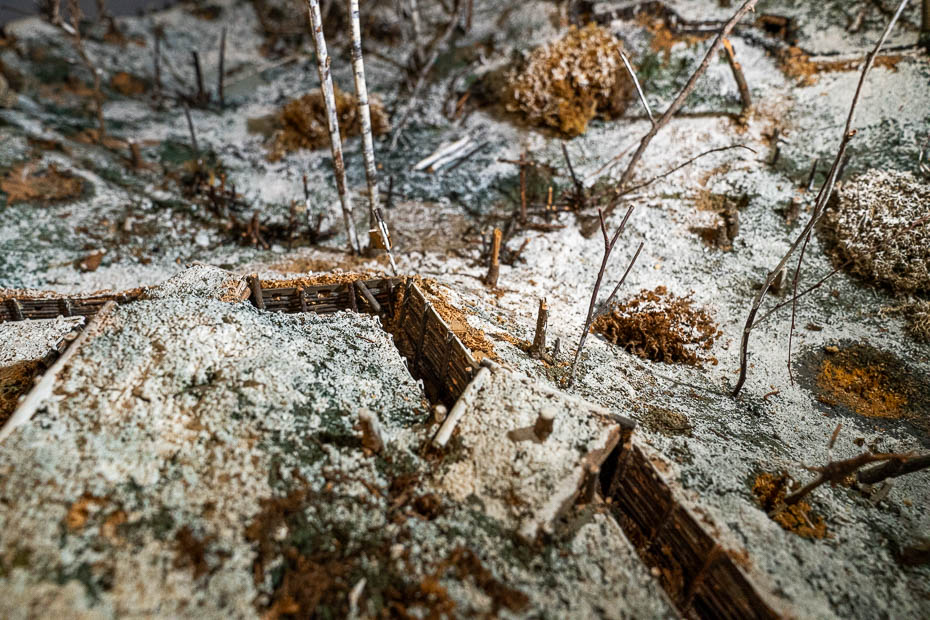
Our first stop is Academia Petrina in Jelgava, or the Ģ. Eliass Jelgava History and Art Museum. Built in 1775 as the first institution of higher education in Latvia, the building was restored after World War II, which had left all of Jelgava in ruins. In one of the museum’s exhibitions, fused and collapsed structural fragments excavated from the city catch my eye. I immediately remember how during my childhood, when my parents were renovating our apartment, an interior wall collapsed while removing tiles because it was built from the exact same materials—charcoal, rags, wooden scraps, and metal parts.
Although the museum has exhibitions specifically dedicated to military topics (such as modern Latvian military uniforms, which are actually quite difficult to obtain for this purpose), I also find displays on other themes that draw my attention—bottles of a blueberry drink and candy wrappers with designs that look remarkably neat and modern even today. In another display, there are toys and doll clothes made to match the outfits of their young owner.
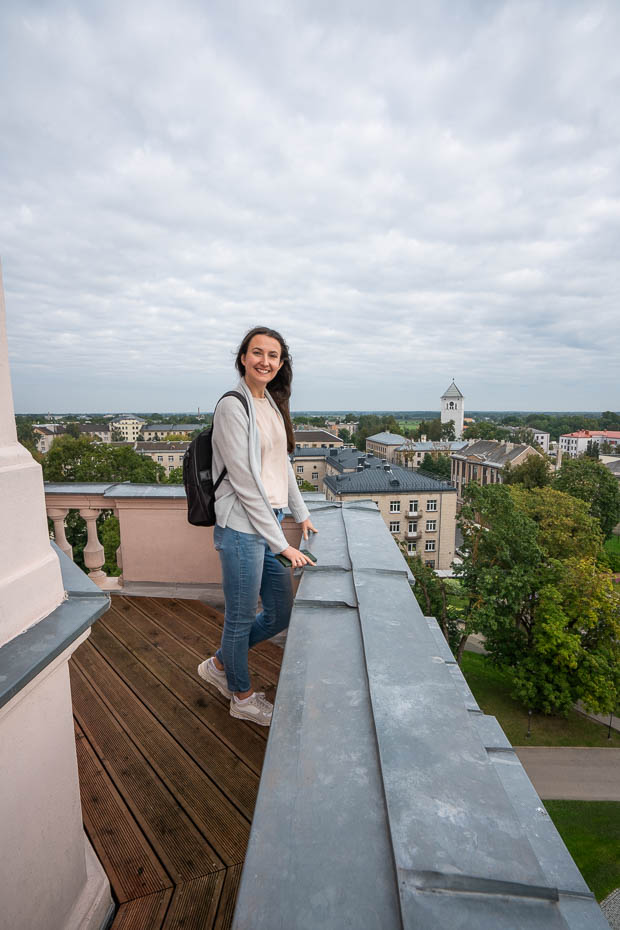
After a short while, it’s time for the building’s final gem. Accompanied by cat drawings painted in the stairwell, we climb up the observation tower, which offers a full panoramic view of Jelgava. The absolute cherry on top that you shouldn’t miss when visiting this museum!
Personal Insights at the Eleja War Museum
Next, the road leads to the “Meitene” railway station and the private Eleja War Museum, which primarily features artifacts from World War II. We are told that this museum is especially popular among boys, as school field trips frequently visit.
This time, the location brings back entirely different childhood memories. My grandfather was once a huge enthusiast of such items, and I remember how we used to travel around to meet elderly ladies and buy medals, peaked caps, and badges. The museum smells of engine oil, mildew, and dust—just like my grandfather’s room, which, along with two garages, was packed to the ceiling with similar historical artifacts.
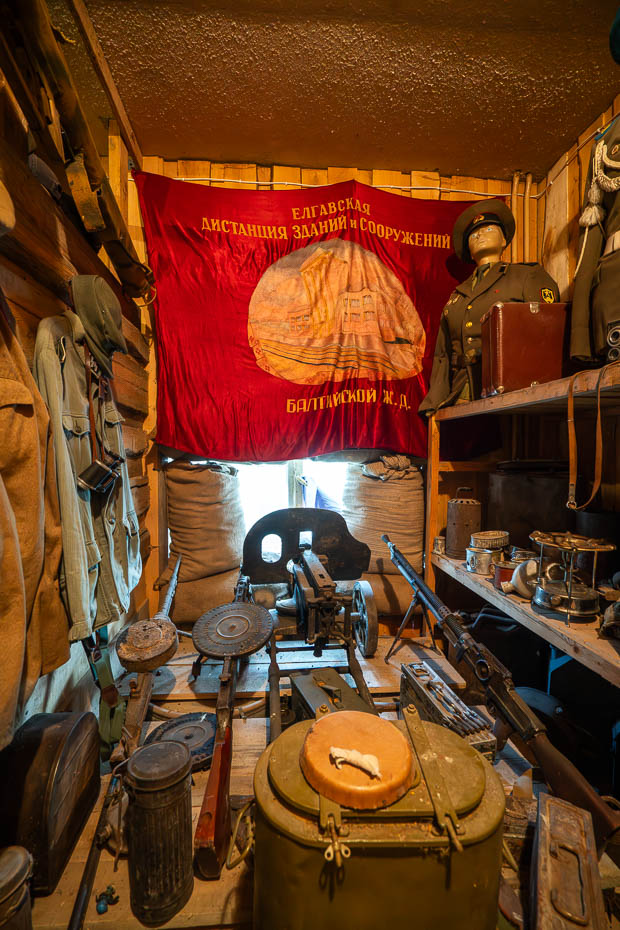
Looking at the immense quantity of exhibits packed into the narrow rooms, I arrive at some introspective realizations about why I prefer minimalism. For a moment, the sheer volume of items becomes so overwhelming that I am forced to step outside to catch some fresh air and look at the train located near the station.
When I pull myself together and rejoin the rest of the group, they are looking at a notice displaying a 1947 regulation specifying food ration limits per buyer. For example: cereal grains 1 kg, white bread and bakery items 0.5 kg. In the 1980s, we lived up north in Karelia, and similar restrictions applied back then too—my mom told me she used to take me along to the shop so she could buy two packages of cheese, as sales were strictly limited to one per customer. At the museum, we learn that many people still actively search for artifacts using metal detectors, and much of what is found goes abroad into private collections.
Retro Car Surprise at the “Miķelis” Complex
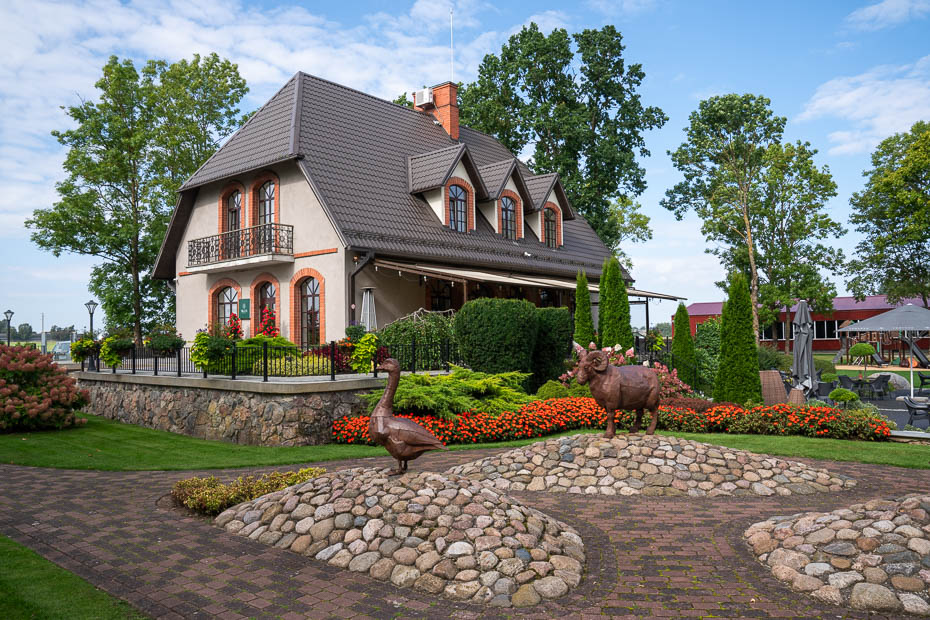
When we arrive at the “Miķelis” complex, I immediately feel that this place will be right up my alley! On one side of the grounds is modern accommodation; in the middle, a large house with a beautiful garden where we will have lunch later. We head over at a brisk pace to check out the main attraction, but I’m already scanning the surroundings, thinking I should come back here for an overnight stay!
It seems to me that all the places we have visited so far benefit greatly from a professional guide’s narrative, but in this location, it is especially worth highlighting. I only know as much about cars as is necessary to drive one myself; as for retro cars, my knowledge ends with memories of visiting Cuba, where one of our drivers polished his car with a tiny brush at every stop, dusting off every single speck of dirt.
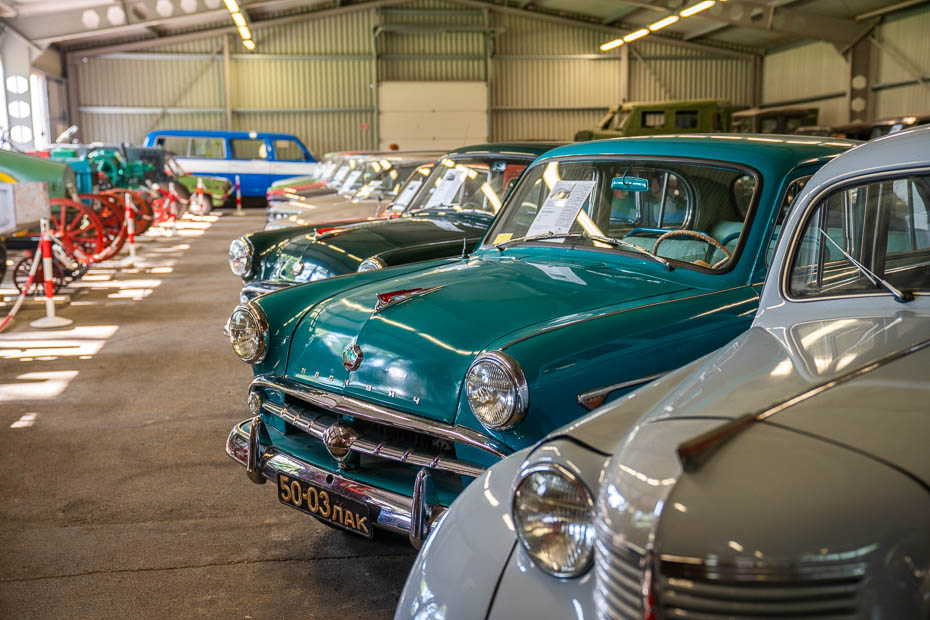
We start with retro agricultural machinery, which includes a Porsche tractor, and soon walk into a large hangar that turns out to house movie stars—countless cars here have been featured in various films, and I shudder to think how much such a collection costs. We inspect a 1930s car that was found walled up inside a structure in Mežaparks, the first assembly-line Ford (available in any color as long as it was black), and the Latvian-built car “Pērse.” This truly becomes a place we likely wouldn’t have driven to on our own, yet it leaves the absolute best impression—complemented by a delicious meal featuring a schnitzel so huge it was almost a pity we weren’t heading home right after to take the leftovers with us!
A Real Narrow-Gauge Railway in Viesīte
After a slightly longer drive, we arrive in Viesīte, home to a narrow-gauge train (bānītis) and a depot. The narrow-gauge railway was originally built for military purposes, but passengers used it later on. In today’s world of high-speed trains, its travel speed sounds comical—up to 14 km/h.
After the war, many bridges were destroyed, so in some places, a train would arrive at a river, passengers would get off, cross the river on foot, and board another train on the other side. Alternatively, for safety reasons, the train would cross the bridge without passengers, or even with the driver jumping off beforehand.
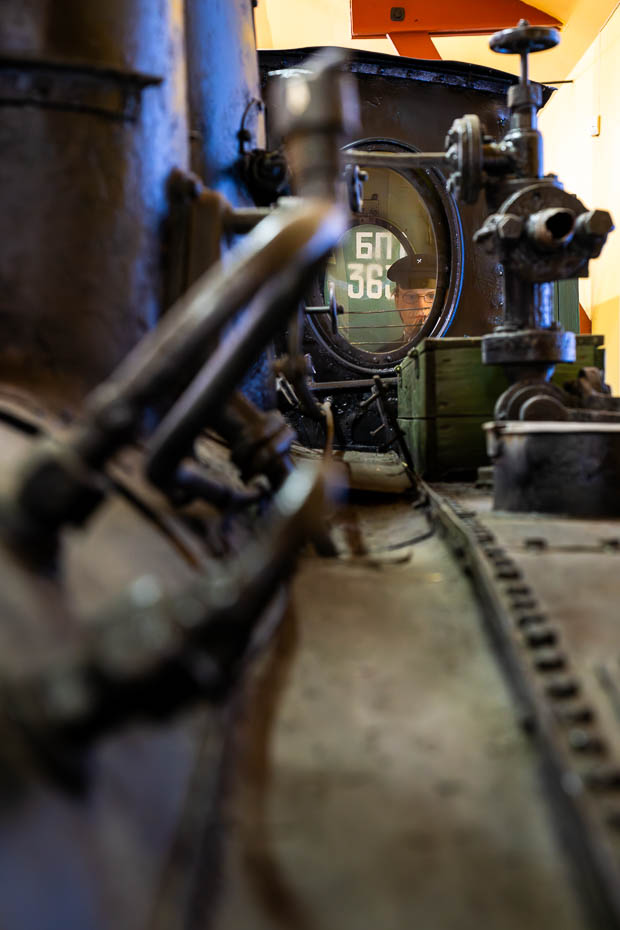
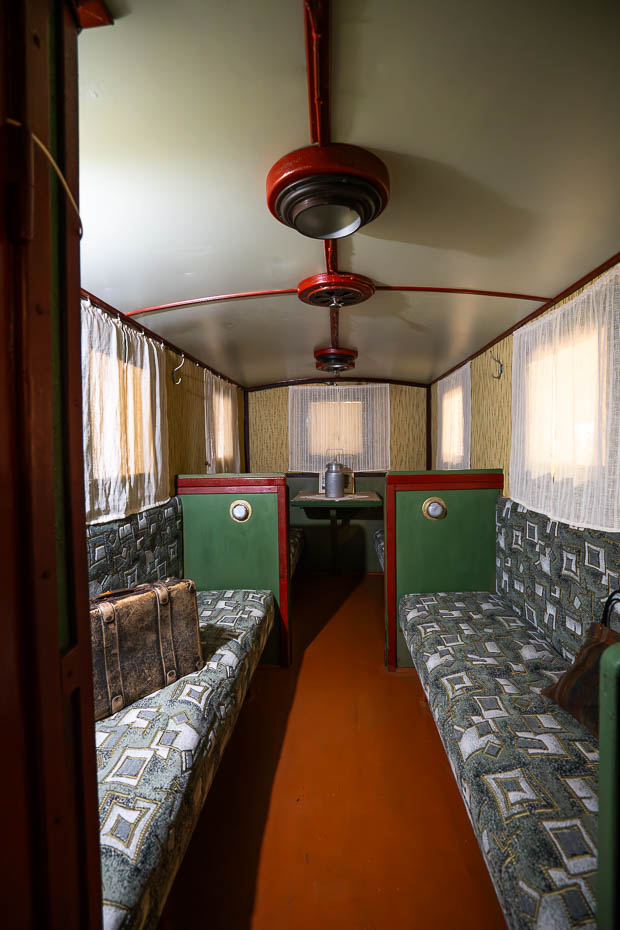
We inspect the staff carriage, which is quite nicely arranged, and head to the second hall housing exhibits waiting for their turn to be restored. There aren’t any true railway enthusiasts in my immediate circle, but I’ve heard before—in Gulbene and Alūksne—that there is a category of tourists who specifically seek out places like this and travel to Latvia from abroad. My only experience with such enthusiasts was in Texas, in the city of Rusk, where special trips are organized for fans of the field, featuring concerts on the train and even dining services. Niche tourism at its finest!
Military and Religious Heritage in Aglona
After a quick bite (again!) in Jēkabpils, we are soon on our way to Aglona. Our main point of interest is the private “WW2” war museum, which houses an immense number of exhibits. When I send a short video from the museum to a relative who is deeply interested in this topic, I receive a genuine wave of excitement about what’s on display.
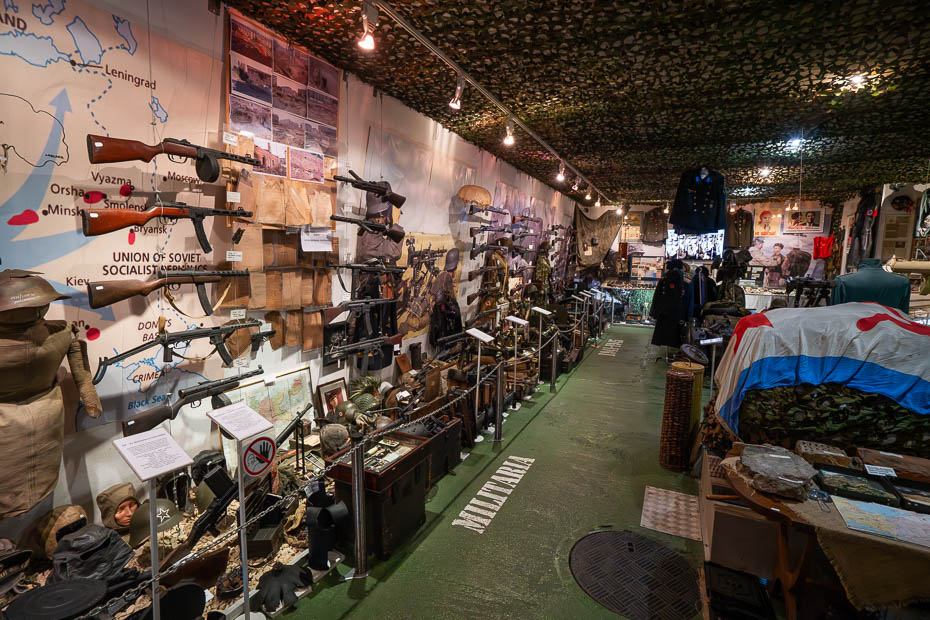
The display cases feature firearms, and in one window, a five-year correspondence between First Lieutenant Augusts and his beloved Marta. Helmets, socks, documents, and syringes—there is a bit of everything here, but above all, there are stories, including the history of the exhibits themselves.
I am bewildered by the fact that on a national level, there is generally no particular interest in these artifacts. Even more so, I am saddened by stories of such items being exported out of Latvia (or imported into it) into the hands of private collectors. But it is truly distressing to hear that some of these items are uncovered by black-market treasure hunters—someone hears that something is buried somewhere, goes out searching, and digs up an airplane from a swamp complete with the remains of the victims, which crumble almost instantly upon contact with air. Perhaps it’s good that at least someone cares, but is losing important historical evidence during what are most likely unskilled excavations right? Currently, all of this relies purely on enthusiasm, and it leaves you with deep food for thought.
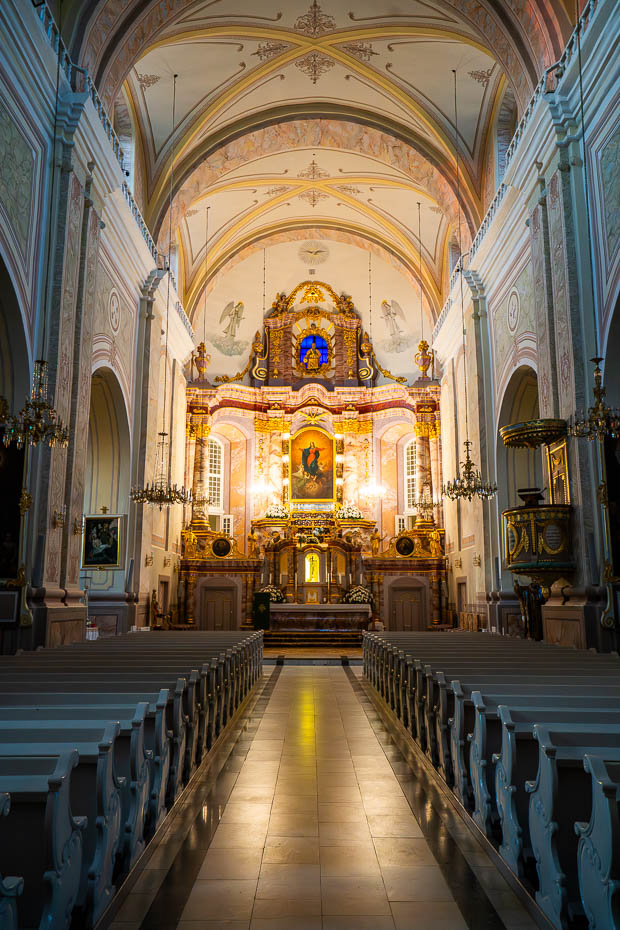
Shortly before sunset, we reach the Aglona Basilica, where we are even allowed up near the altar itself. It’s my first time seeing it so empty. I’m used to seeing the premises packed to capacity, with rows of buses in the parking lots. I remember one year when I was here with my grandmother and we slept in our bus, a woman started screaming at the top of her lungs in the middle of the night. She was terrified upon seeing a man enter the bus—turns out it was just our driver, who had stepped out to use the restroom during the night. He just laughed it off, joking that he works part-time as a ghost! Truly a trip full of reflection this time, bringing up unexpected memories.
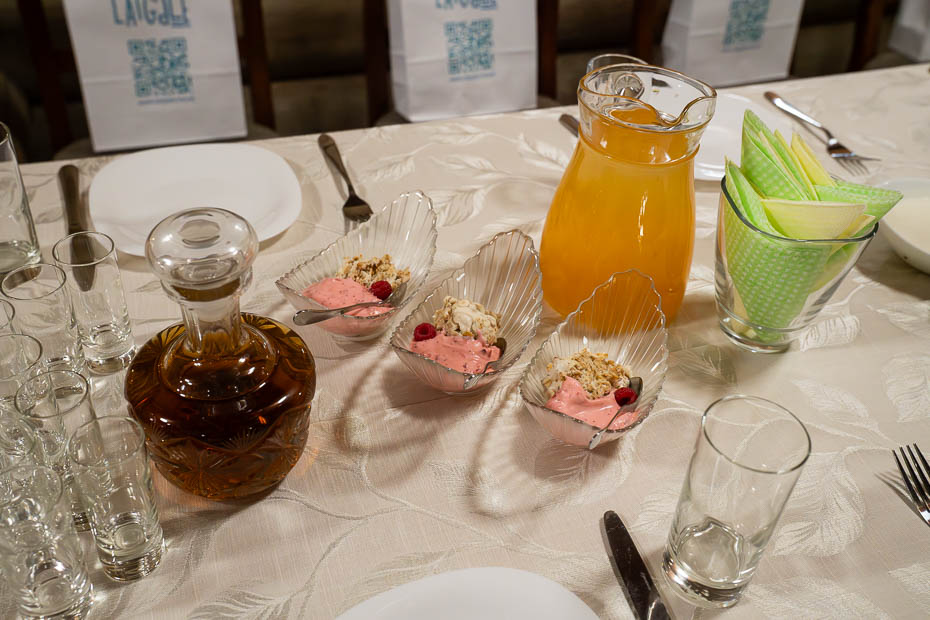
In the final minutes allowed for our driver’s shift, we manage to arrive at the “Zaļā sala” accommodation, where a table overflowing with delicacies awaits us. Just when I’ve eaten my fill, it turns out there are guļbešņīki coming up! I remember them well from my previous tour of Latgale, when I also discovered kļockas. Once again, it’s almost a shame we can’t pack it all up in a box to take home—there’s still a long day on the bus ahead!
First Republic Treasure House in Rēzekne
The next morning, our first stop is the “Brīvvalsts dārgumu nams” (Treasure House of the First Republic), located right next to the castle mound and opened relatively recently, in 2022. I had heard about it before as an absolute must-visit spot in Rēzekne. At this cultural venue, you can view military and civil decorations from Latvia’s first period of independence and learn about their history. Several hundred items are on display, with special attention paid to Latgale.
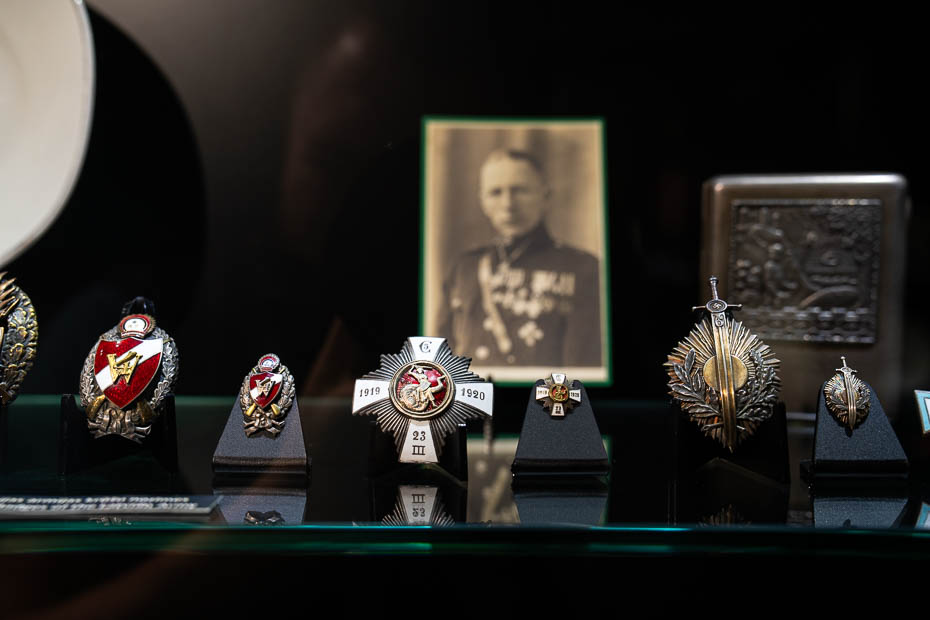
A guided tour is available for a very reasonable price, and this is one place where you simply shouldn’t go without one! Walking through the halls on your own, yes, it’s beautiful, and yes, you can learn a bit more by reading, but thanks to the guide’s storytelling, the exhibits truly come alive. Suddenly, you notice nuances that were right in front of your eyes, but you had no idea you should look for them! The posture of a depicted bear, the material an item was made of, how they were used or worn, who received them, and how few of them have survived at all. On the second floor, we take a quick look at the temporary exhibition—this time about coins—and take a photo of the view from the balcony overlooking the castle ruins (what a spot for a nice café this would be!), and then it’s time to move on.
Ludza – The Oldest Town
Next, our route takes us to Ludza, which is said to be possibly the oldest mentioned town in Latvia (as Lucina). It seems crazy—we know so many facts about Pharaohs and their lives 3,000 years ago, yet here, regarding events from 850 years ago, there are already conflicting theories about whether this specific town was actually mentioned or not.
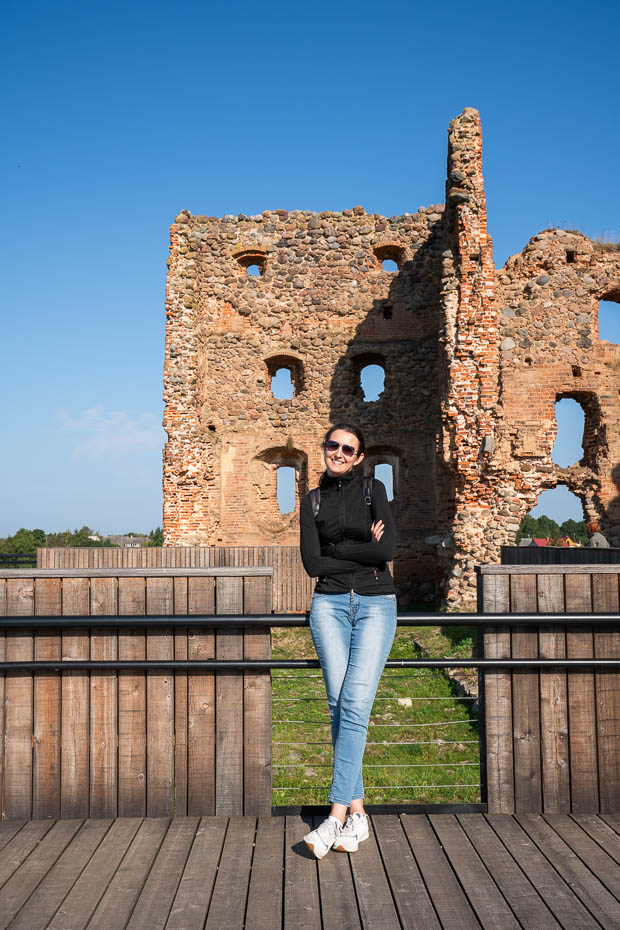
First, we stop by Ludza Castle, built in the 14th century, of which ruins, two tower walls, and an outer wall remain today. The ruins offer such a magnificent view of Great Ludza Lake and Small Ludza Lake! Clearly, one needs to come back here for an unhurried, multi-day summer trip.
Our next stop awaits us: the Ludza Local History Museum, the oldest in Latgale. We explore both the military heritage exhibition and other displays. I linger outside in the garden for a moment, enjoying the uncharacteristically warm rays of sunshine.
Here, it’s time for another childhood memory: while washing my hands after using the restroom, a memory of my great-grandmother’s garden in Stara Vyzhivka, Ukraine, flashes back. We washed our hands in the exact same way—a water container with a hole and a wooden peg at the bottom; when pushed deeper into the vessel, water begins to flow. I hadn’t thought about such an artifact for at least thirty years, but look at that—they can still be found today.
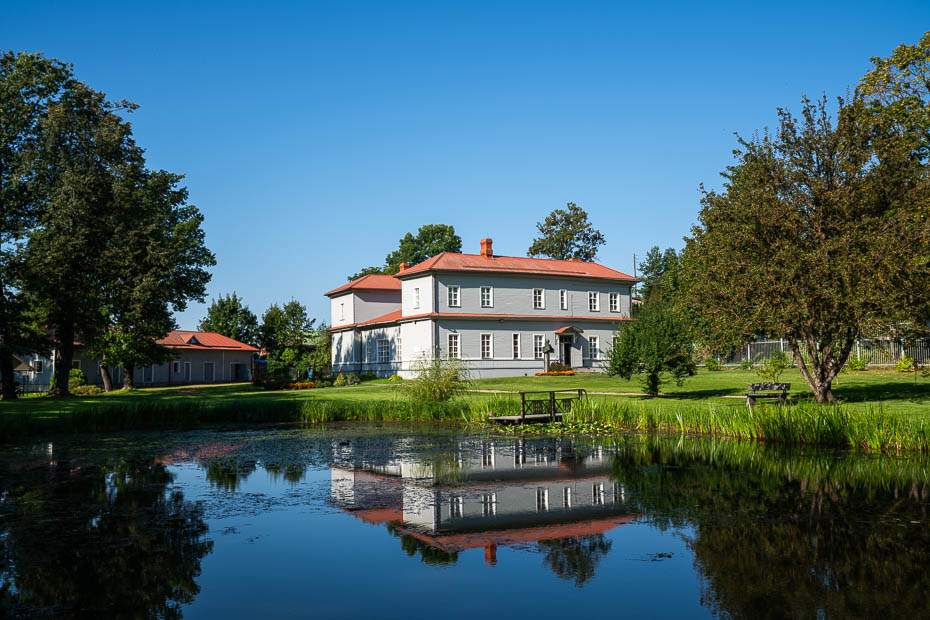
Latgale Šmakovka in Malnava and Bunkers
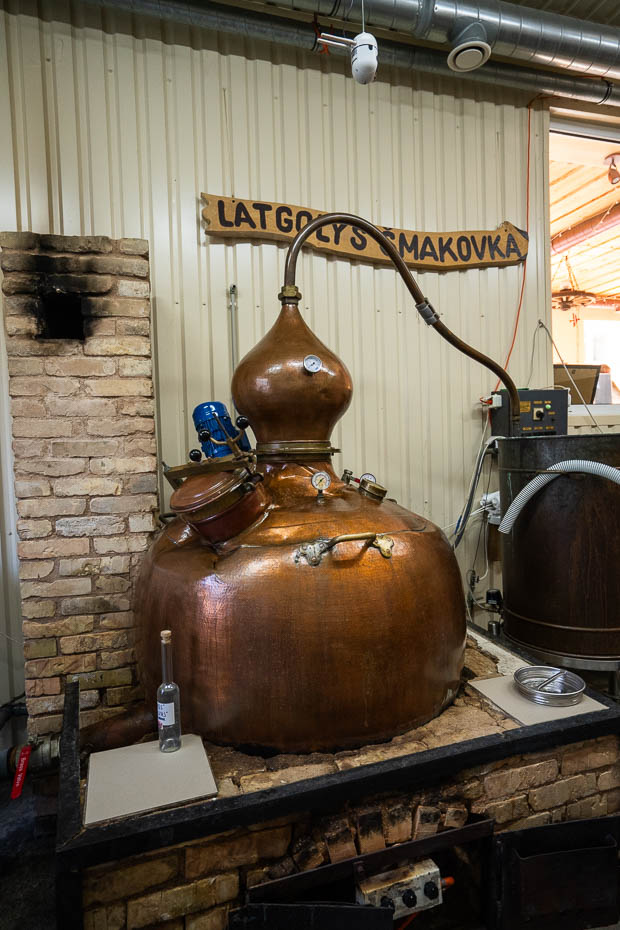
In Malnava, our first stop is the “Latgales šmakovka” distillery, where we hear completely surreal stories from the owner about setting up the place: adventures with the moonshine (šmakovka) copper still, a fire in the sauna, the first event, and other occurrences. Even if spirits don’t interest you at all—as is the case for me—it is still fascinating to visit and learn more about active, resourceful people who refuse to give up.
On the wall, I spot a poster reading: “Do not forget! With every lats you spend on foreign goods, you support foreign industry and foreign workers, while creating unemployment and hardship in your own land. Therefore, buy only Latvian products!” What a coincidence! I had just read a very similar quote in Codie Sanchez’s book Mainstreet Millionaire, where the author discusses how every dollar spent within the local community supports the people around you, and how little of it reaches local hands if you choose products and services from large corporations instead.
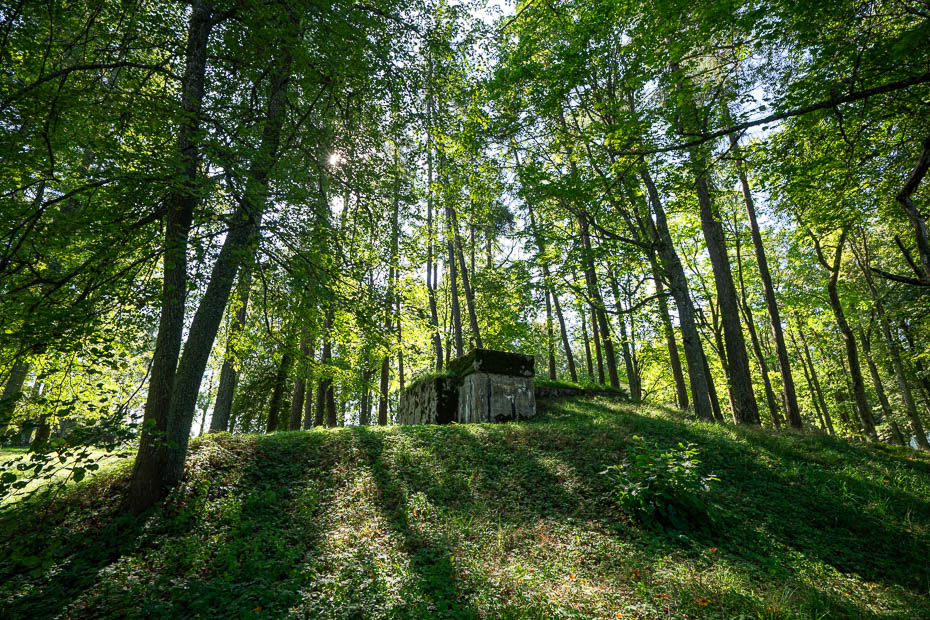
Once the topic of beverages is wrapped up, we head towards Hitler’s bunkers. We are very close to the border here, and “dragon’s teeth”—part of the Baltic Defense Line—are stacked in rows. A slight chill runs down my spine seeing them with my own eyes, bringing back memories of what I read a while ago regarding local residents’ thoughts on these “teeth.” Many living near the border are not ethnic Latvians, and many live in a different information space.
Much like the first historical mention of Ludza, there are various versions regarding Hitler’s bunkers in Malnava. First, it is clearly known that they were built later, in 1944, and were never inspected or used by Adolf Hitler himself. Hitler was said to have visited for just two hours on July 12, 1941, but this fact relies on the memories of a Malnava schoolboy and footage seen in a newsreel. The footage supposedly shows the facade and gates of the Malnava Manor, which are typical of many 18th-century buildings, leading some historians to dispute the claim. Even if he didn’t actually visit, every place needs its own legend, and it doesn’t hurt when learning history. And if he did visit—all the more reason!
Lunch, Exhibition in Viļaka, and Stompaki Bog
For a while, we drive along the P45 road, where the border is genuinely within arm’s reach—observation towers from the other side are visible. All around us are cultivated, plowed fields. Everything is neat and orderly. There are no shoulder-high weeds anywhere, which people who have seemingly never stepped outside the city occasionally ask me about.
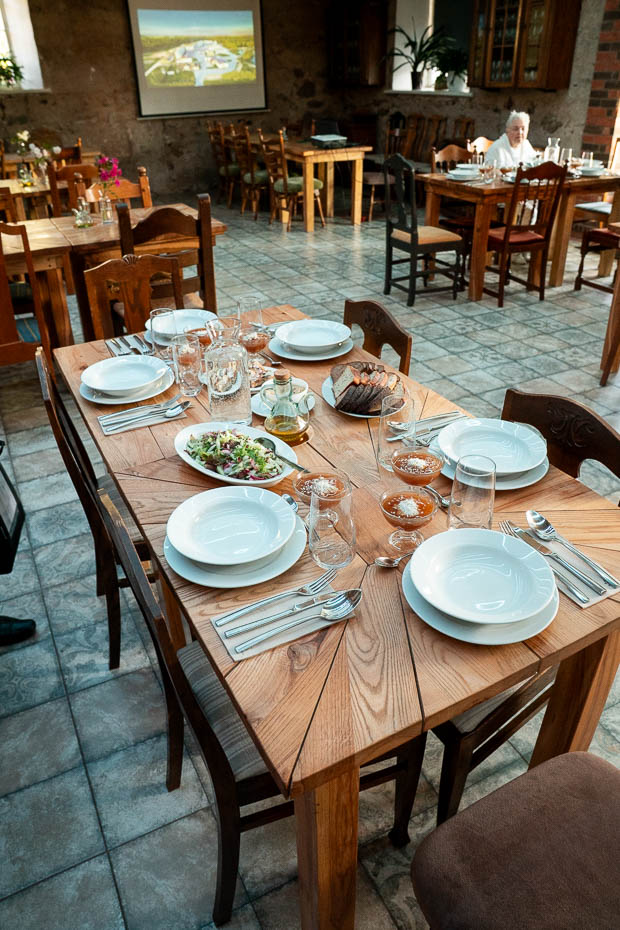
We have lunch at the farm “Kotiņi,” where a hearty meal made from local produce has been specially prepared for us. The barley and tomato soup is exceptionally good, and the pea patties are delicious too. Yet another story of determination, resilience, local jobs, and future plans.
The day is winding down as we reach Viļaka and “Abrenes istabas” (Abrene Rooms), a building located on the former Marienhausen market square. It later housed apartments, offices, and shops, but during World War II, it served as the headquarters for the Latvian self-defense unit, the Gestapo, and the Cheka. Now, this private exhibition features historical items and offers insight into events in the area from 1920 to 1960.
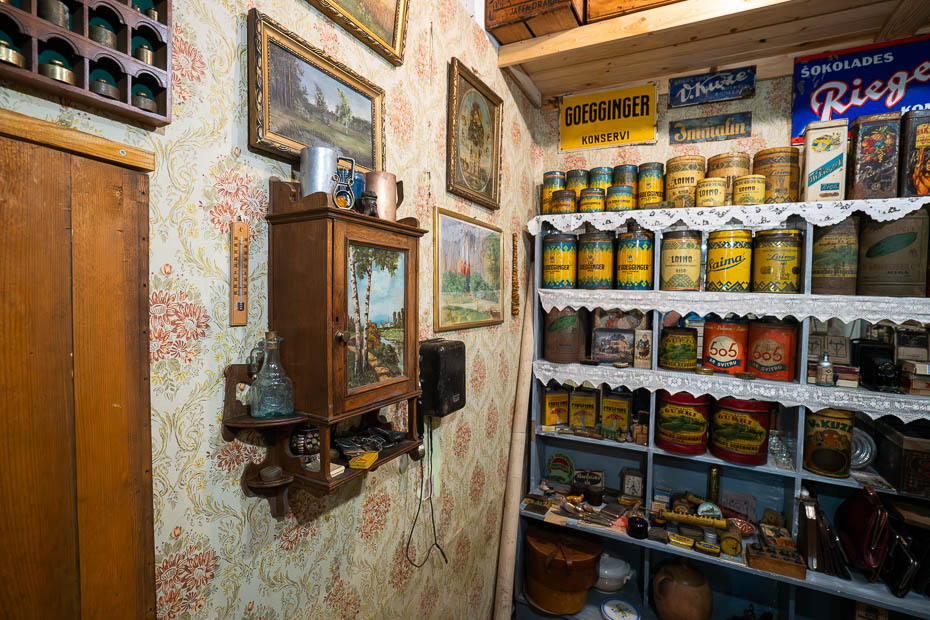
There is plenty to see for military history enthusiasts—uniforms, weapons—as well as for other visitors, such as a Soviet-era boss’s office, and a delightful room set up as an old shop. Boxes of “‘Mušmire’ Insect Destroyer,” “Laima” candy tins, packages of freshly salted cucumbers, and posters on the walls announcing local dances—indicating not only the start time, but also how late the dancing was allowed to go on! The last time I saw such an authentically arranged shop was in Texas, at the Kilgore Museum, and it’s a joy that such a gem exists right here in Latvia, in Viļaka.
The owner of the private collection, Dzintars Dvinskis, joins us for the remainder of the trip as we head to the Stompaki Bogs, which we had visited previously on a wintry day. Now we can compare what it looks like in a different season while listening to the guide’s narrative about the key sights. During World War II, this area was home to one of the largest national partisan camps in the Baltic States. Dzintars is well-prepared, carrying both a mug and a replica rifle. He tells us that on school trips, children usually can’t agree on who gets to carry it.
We walk through the partisan quarters, peeking inside the small buildings that are only partially underground. Three bunkers have been restored—the church, the headquarters, and the living quarters. People were not allowed to walk freely around the camp territory; leaving the premises was permitted only when going on a mission or gathering at the church.
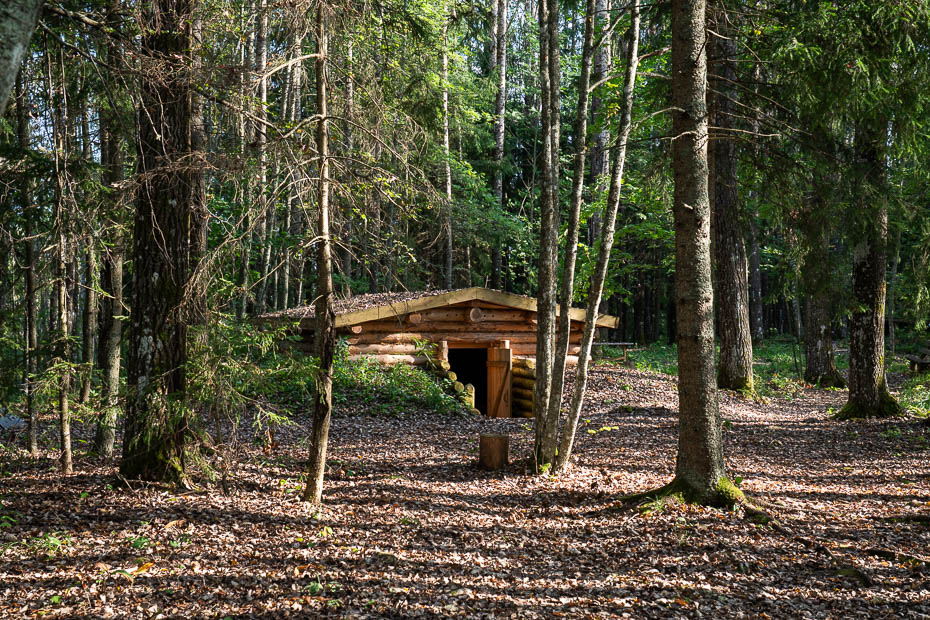
Some of the bunkers have not been restored, leaving only water-filled pits visible. At one such spot, our guide shows us where the prison used to be. A camp of this scale needed one, as around 350–360 people lived here.
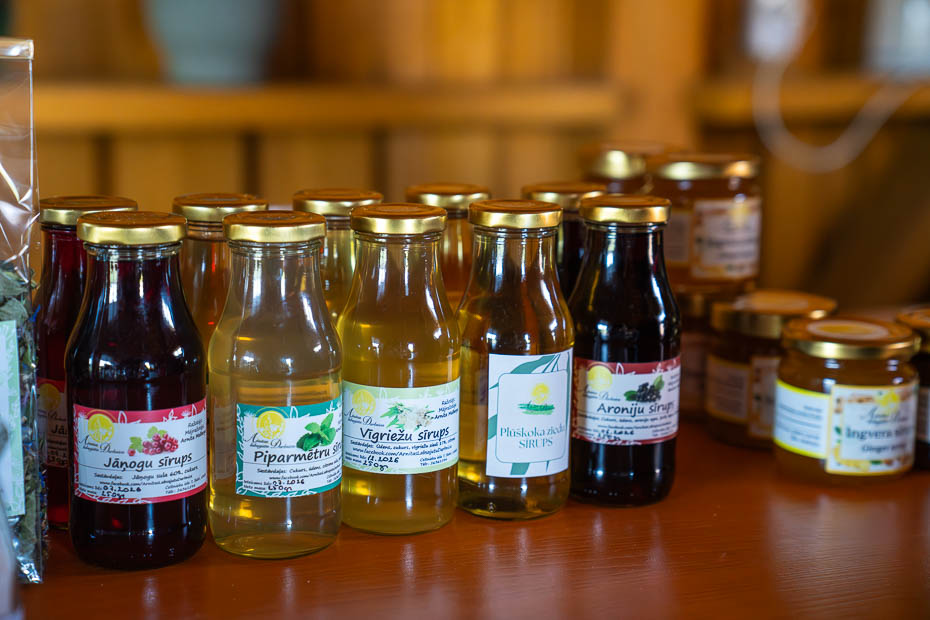
On the way home, we drop by “Arnitas labsajūtu darbnīca” for a bite to eat, and then it’s smooth sailing home. Only two days, but so full of impressions! It feels as though we’ve been on an entire trip abroad, yet we only left home yesterday morning. These two days stand out vividly in memory, while the surrounding weeks blend together. Such are the trips that sometimes, even years later, allow you to recall the day in ten-minute fragments, vividly sensing the smells, tastes, bright colors, and impressions of that moment.
Thanks to the Zemgale and Latgale Tourism Promotion Offices and Planning Region for the invitation to join the trip! Everything mentioned in the article reflects the author’s personal opinion.