Over the past ten years, out of many hundreds of flights in total, I have happened to fly business class on long-haul routes (over 6 hours and outside Europe) about a dozen times, and a few times more on short-haul flights. I can absolutely state that the offering varies significantly, and before paying substantially more for a business class flight, it is well worth checking whether your expectations will match reality. So far, I have flown with Turkish Airlines, United, Lufthansa, AirCanada, and LOT on long-haul flights, and LOT, airBaltic, SAS, and Lufthansa on short-haul ones.
Similar articles
How to claim compensation for a delayed flight in the EU
Tips from a travel blogger on getting cheaper flights
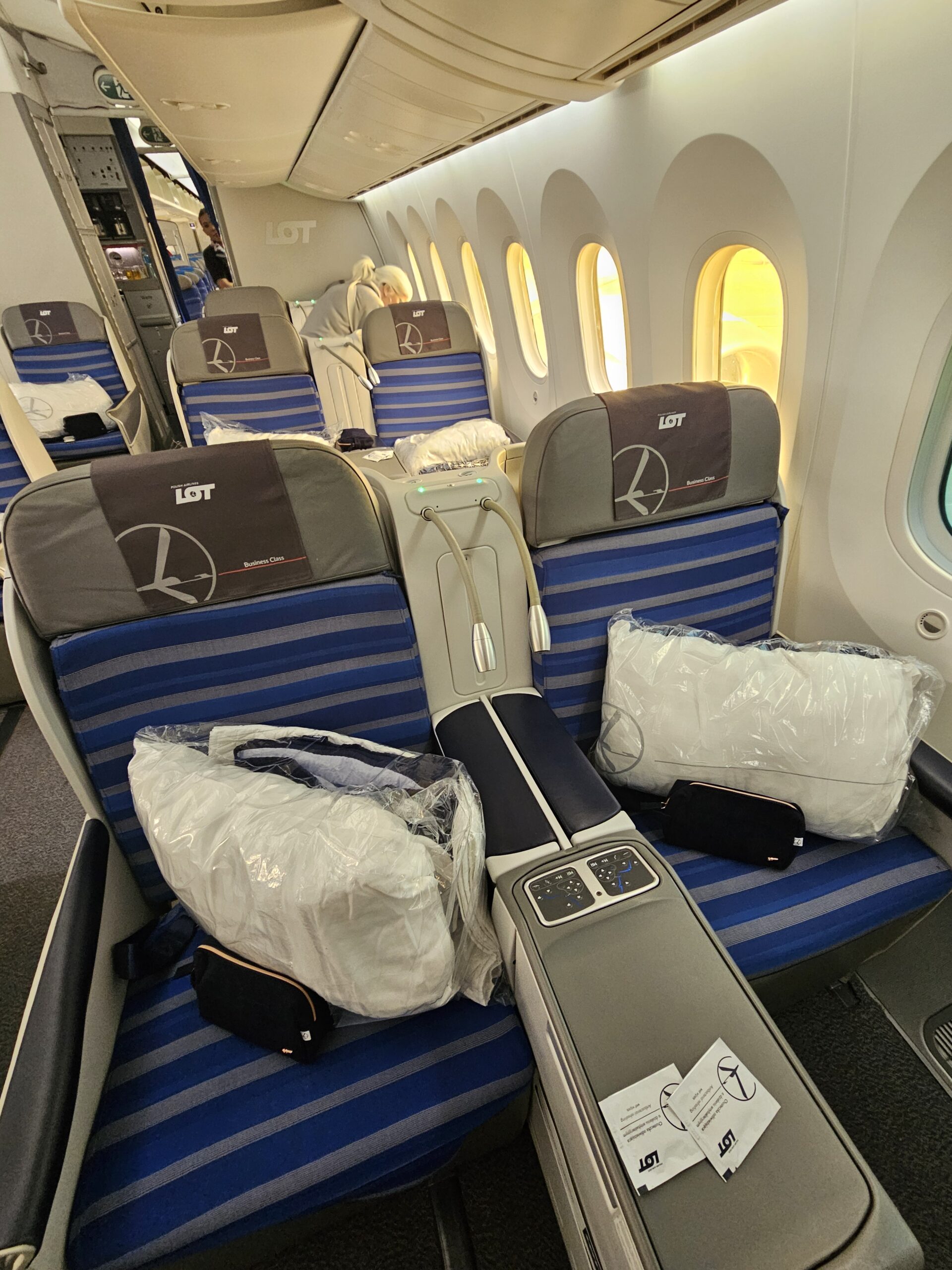
How to Get the Best Deal on a Business Class Flight?
Contrary to what people often write in social media comment sections—claiming that Latvian residents do not choose this product—every time I have written about this topic on social media, many people send private messages. They share that they either fly business class on long-haul routes themselves for the sake of comfort, have it provided by work, or have managed to purchase tickets at more favorable prices.
- Loyalty Points: Foreign websites frequently talk about business class tickets purchased with loyalty points—typically content creators from the US. While this is, of course, also possible for Latvian residents, most people do not have the same easy access to point-accumulation opportunities through co-branded rewards credit cards as they do in the US. Furthermore, the availability of these award flights tends to be limited. However, paying with loyalty points remains one of the ways to fly business class.
- Promotions: Travel forums (such as the Ceļo gudri forum) and blogs (Fly4Free, SecretFlying, TravelFree) usually highlight great deals on business class flights. Although they are not found as frequently as everyday economy deals, here are a few price examples from promotions over the past year (round-trip prices): Madrid to Mexican resort cities for €1,134; Rome to Phuket for €1,668; Bangkok to Copenhagen for €1,424; Madrid to San José (Costa Rica) for €1,480; and Ireland to North American cities returning to other European cities for €600–€800. These are certainly not dirt-cheap tickets, but often a standard economy or premium economy ticket can cost just as much when flying during peak times or booking last minute.
- Bidding in Advance and Airport Upgrades: Bidding for business class tickets is also possible when flying with airBaltic; depending on the route, the minimum bid can be €90. This grants all business class perks—more baggage allowance, business lounge access, an in-flight meal, priority boarding, priority security control, and more. For other airlines, such upgrade offers can start from €50–€60, so it is worth opening airline promotional emails before a flight to review what is being offered. This option can also pop up on longer flights, with the opportunity to purchase an upgrade right at the boarding gate. I have heard announcements several times stating that there are seats available and that passengers can inquire with staff—though when asking about them, I haven’t heard particularly enticing prices, often even exceeding €2,000 for a one-way ticket. However, there can certainly be situations and airlines where these costs might be more affordable! For other routes, I have heard of offers within the €300–€500 range per person, though most commonly it is around €1,000.
- The Luck Factor: Sometimes travelers get lucky and get upgraded to business class for free—for instance, if economy class is overbooked or if a seat is broken, while there are still empty seats in business class. This has happened to me a couple of times on short-haul flights, and I know several people who have flown this way on long-haul routes as well. I also know of a case where a passenger with a business class ticket was offered a seat in first class due to a full flight.
- Cheaper Departure Cities: Due to competition, there can be situations where it is financially advantageous to fly to another city and take your business class flight from there, as the ticket will be much cheaper than departing from Latvia. Cities often mentioned for this include Oslo and Stockholm. According to recommendations from ThePointsGuy, other such cities include Colombo, Cairo, Karachi, Kathmandu, Johannesburg, and San Juan.
How Expensive is Business Class if You Buy a Full-Price Ticket?
I am often asked this question, and the answer is the same as for any other ticket: it depends on the flight duration and occupancy, how early the ticket is purchased, whether it falls on peak dates, what type of business class it is, and what perks are included in the ticket (because, just like in economy class, these tickets vary).
My experience regarding the cost of long-haul business class tickets is that whenever I have needed one, it has been, on average, three to eight times more expensive than the cheapest available economy class ticket. It can be €3,000, €5,000, or more.
There can also be situations where a premium economy ticket costs more than a business class ticket because people tend to search for a specific class rather than looking for the cheapest available option across the board. Likewise, I have seen (and purchased) premium economy tickets that were cheaper than economy class tickets on the exact same flight. While such offers are not frequent, it is always worth checking—especially if you need extra services that are not included in the cheapest ticket, typically checked baggage, which nowadays might not be included in the price even for long-haul flights.
First class tickets can cost 10, 15, or even 20 times more than economy class tickets. I haven’t experienced this type of flight myself just yet. The first-class product is only offered by certain airlines; it is not available on all of them.
What to Look Out For Before Purchasing a Business Class Ticket?
The first things to pay attention to are the flight duration and the aircraft type. On short-haul flights within Europe (for example, on all airBaltic flights), there are no lie-flat beds in business class. In row configurations with three seats side-by-side, the middle seat will be left empty, and in rows with two seats, the adjacent seat will be empty. In the US, by contrast, you typically get wider seats, but both adjacent seats will be occupied. Many tend to say that the only difference in short-haul business class is that you sit at the front and a curtain is drawn across the zone during the flight. While that isn’t entirely true, these advantages are definitely not as pronounced as on long-haul flights featuring modern business class setups where the seat transforms into a bed.
The aircraft type can usually be seen either on the airline’s website when buying the ticket, in a search engine, or conveniently viewed for the flight in the Matrix system. Keep in mind that the airline retains the right to change the aircraft model up until the last minute. This can mean a swap from a new aircraft to an older one, from a double-decker to a single-decker, from a 1-2-1 business class seat configuration to a 2-2-2, or the flight might be operated by a partner airline. A change in aircraft model is not grounds for compensation—only a downgrade to a lower class is (in which case you are entitled to up to 75% of the ticket price)!
Once I find the aircraft type, I usually look up reviews on blogs—I type the aircraft type, airline, and route into Google and see what the reviews say. It is definitely worth paying attention to the date of the article, as the reviews might be about a previous generation of business class, or conversely, about specific planes that are not common across the entire fleet.
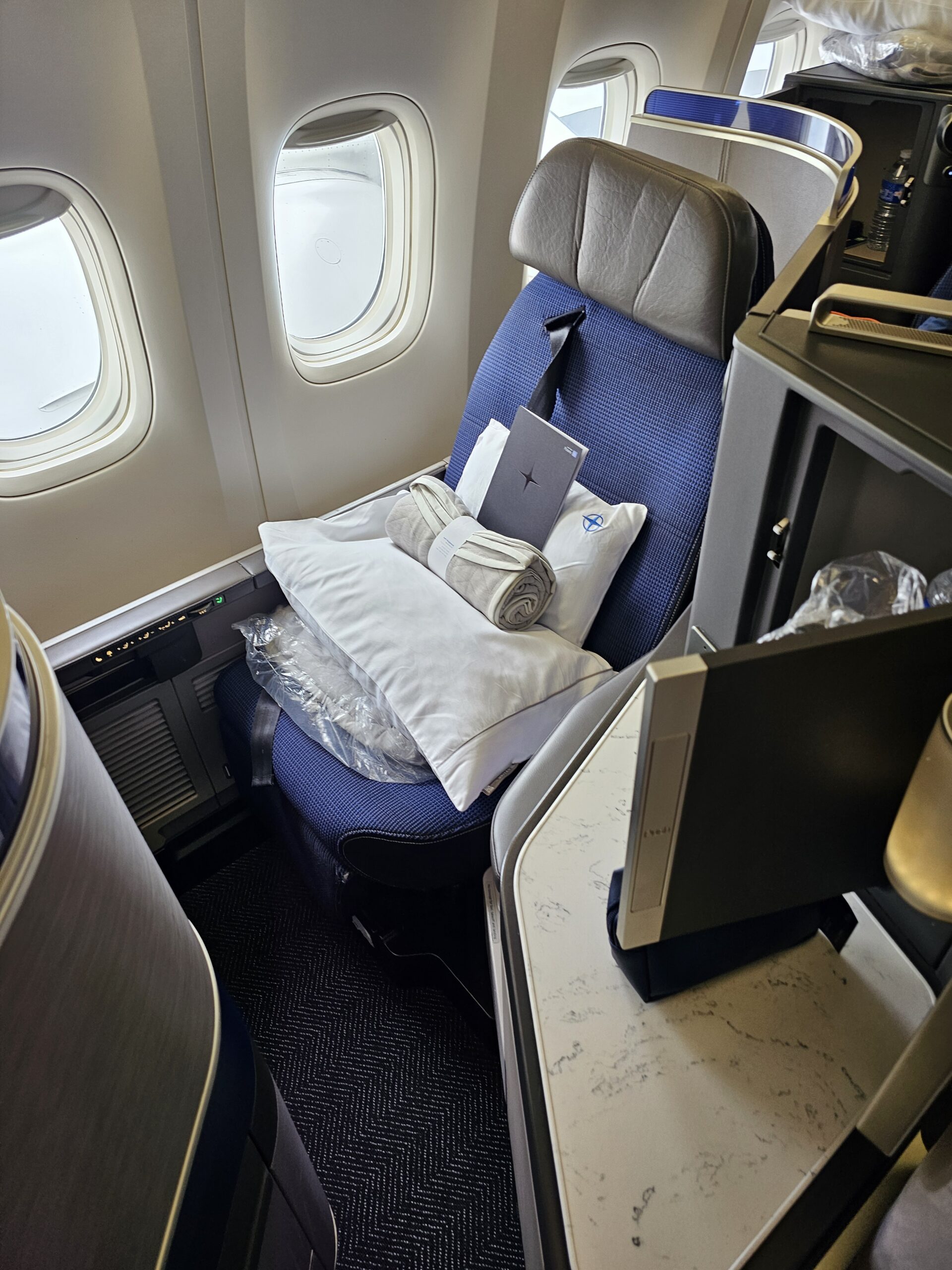
In these reviews, the main thing I look for is how the seat transforms into a bed (for long-haul flights), referred to as a lie-flat seat, because this is absolutely the most important factor! Not all long-haul flights are operated with aircraft where the seat transforms into a bed. There are plenty of airlines with older-type aircraft, especially outside Europe and the US, or outside the most well-known carriers. For people over 185 cm tall, it is also worth reading up on how long this bed is, as sometimes it isn’t much longer than they are, and they might not be able to stretch out fully. The width of the seat is also important, as is feedback regarding footwell space; I have flown on a plane where the footwell gap was so small that even for me, with a shoe size of 41, it felt a bit tight.
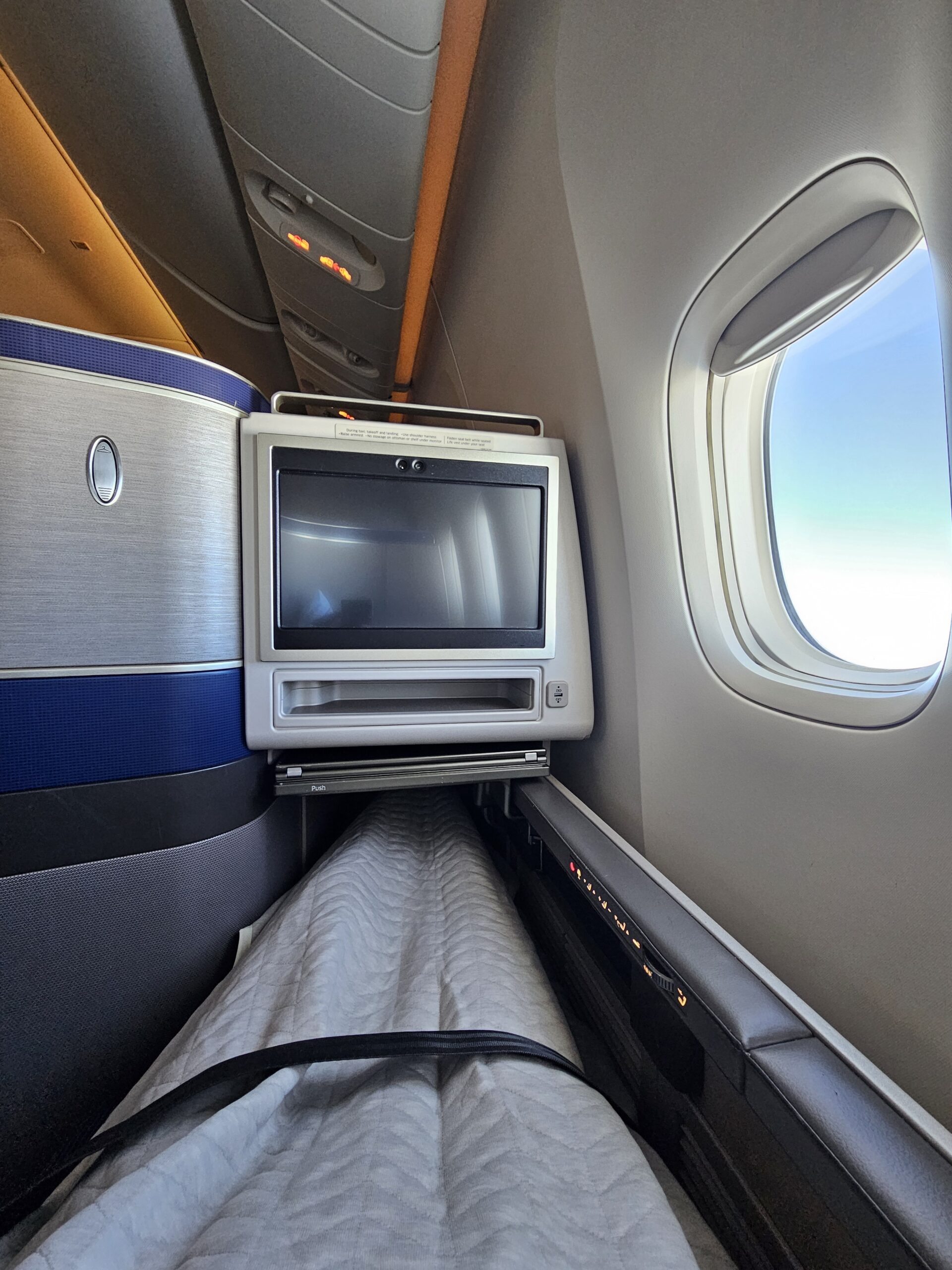
Next, I pay attention to the seat configuration:
- A 1-2-1 layout means that all passengers have direct aisle access, which is crucial during the night.
- A 2-2-2 layout means that for those sitting by the window, if the adjacent passenger has fallen asleep, they will have to climb over a sleeping person or ask them to move when going to the restroom. This isn’t a dealbreaker for me because I am tall and can usually step over easily, but it can be disruptive.
There are other nuances to seat layouts too: there are window seats where your back is turned to the window, seats where your neighbor is very close without a privacy divider, and seats that feature a genuinely large privacy door which, when closed, makes you feel almost as if you are in your own little room. Of course, this “room” with a shared restroom still provides less private space than a hostel room often does, but if the price is the same, it is worth paying attention to. Tools like Google Flights also detail specifics about the seat and whether internet is available (in business class, it is sometimes free or at least free for messaging apps like WhatsApp) along with power outlets. On long-haul flights, my experience shows that outlets/USB chargers are usually built into the seat, but there is absolutely no guarantee that they actually work!
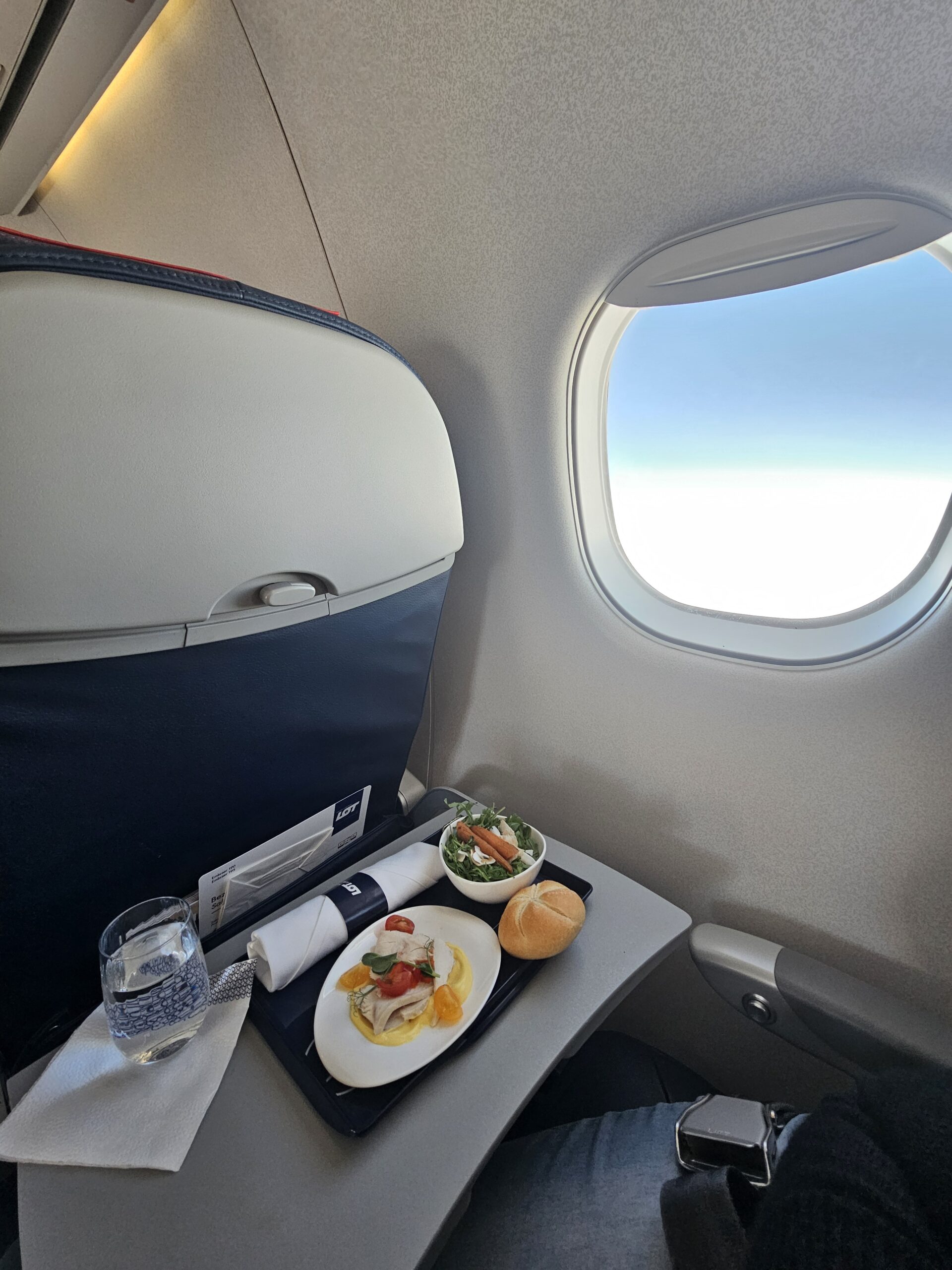
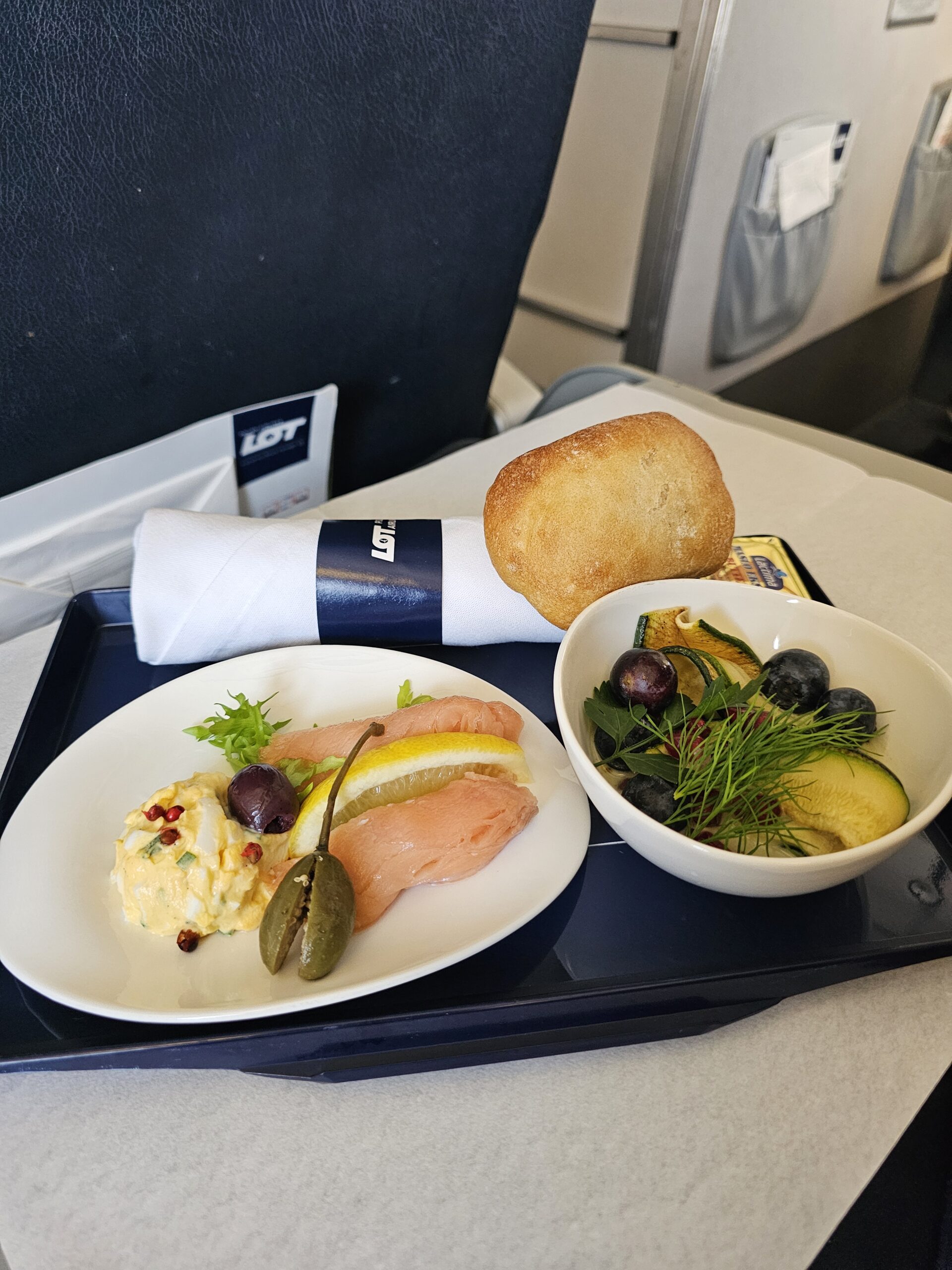
The next step I usually take is to read reviews about the remaining services, though these are generally less critical to me—such as how good the catering is. Unless there are comments stating that the food is completely unpalatable (which is genuinely rare and would more likely come from serious foodies), I look this up mostly out of curiosity. The menu on flights is changed regularly anyway (and in business class on long-haul flights, a printed paper menu is usually presented to choose from—typically offering a choice between two or three main courses).
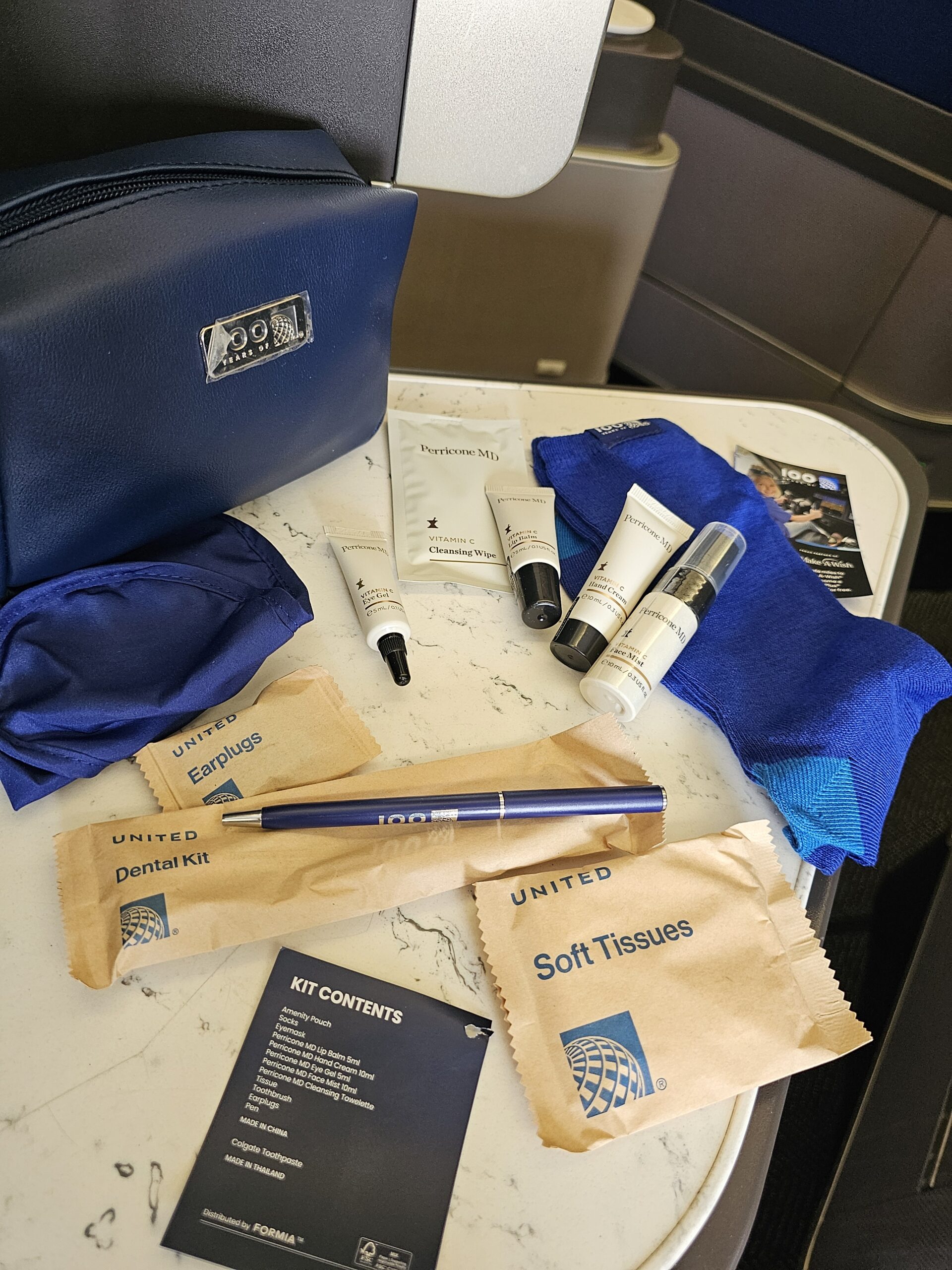
Usually, a small amenity kit is provided during the flight containing socks, a toothbrush and toothpaste, earplugs, an eye mask, hand cream, lip balm, and sometimes an aromatic mist, face cream, or some other knick-knack—typically slippers as well. On exceptionally long flights, pajamas are also provided (so far, I’ve only come across this once on a flight from San Francisco).
Other benefits include the baggage allowance (one or two pieces, 23 kg or 32 kg for checked bags, or a larger allowance for carry-on items) and access to business lounges. For instance, airlines tend to have much better lounges at their home hubs. Similarly, alliance airlines (such as Star Alliance) grant access to lounges within the alliance network. However, it is essential to check which type of business lounge you can access; for example, with both United and Lufthansa, there can be differences regarding which lounge you get into depending on whether you are a business class passenger, hold loyalty status, are a first class passenger, a long-haul passenger, etc.
Those who consume alcohol often review the available beverage selection. If you have to head straight to a meeting after the flight, there are arrival lounges available to arriving passengers where you can, for instance, take a shower. The cheapest business class tickets might not include lounge access at all! It is also worth reading reviews about lounges in advance, as they are by no means identical. With a business class ticket, you can visit all the lounges in the terminal that accept access. For example, in Frankfurt, I have gone to both the Lufthansa lounge and the AirCanada lounge. Access is usually available in other terminals as well, so if I have plenty of time, I tend to stop by the Schengen lounge first, and then the non-Schengen lounge if my flight departs from there. Non-Schengen lounges are usually emptier, though not always. Lounges in the US tend to be extremely crowded because so many people have access; for instance, in the United Polaris lounge, buffet-style food is freely available to all visitors, but you might have to reserve a time for a la carte dining in advance, otherwise you have to wait in line for an hour. Additionally, I recently had an experience in the US where, upon arriving at a lounge roughly 3.5 hours before my flight, I was asked to return later because the lounge was full—I did not agree and stated that I wished to sit down now, so they let me in. Considering that you typically cannot purchase access to these lounges for a fee (with rare exceptions), and the people getting in are business class passengers (of whom there are just as many as before) alongside premium credit card and status holders, the blame lies with overly widespread status/card access.
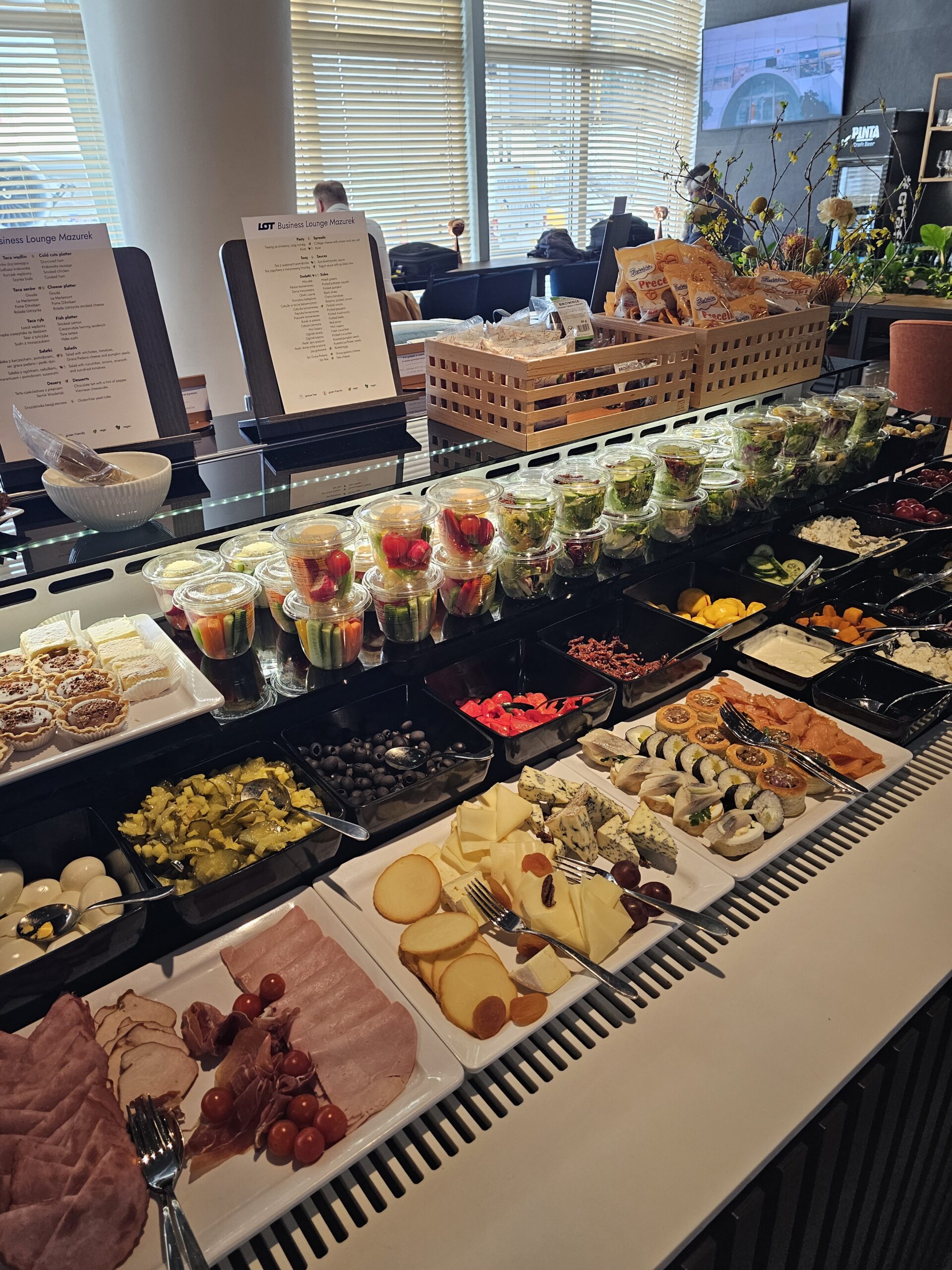
A standard perk of business class is also priority check-in, security control, and boarding (though from experience, boarding is by no means always organized so that business class passengers board first—sometimes there is a chaotic crowd, and staff announce that business class can move forward, but it’s impossible to squeeze past). In certain airports, priority passport control for arriving passengers might be available, though I haven’t seen this offered yet.
Important: A business class ticket does not automatically mean that it can be cancelled or changed for free! Often, you still have to pay for changes (date, name), and a fully refundable ticket can cost an additional 20% more.
In-flight service is, for the most part, better and friendlier than in economy class, as more experienced flight attendants work here—however, this is not always the case. I have had two situations on Lufthansa flights where I encountered overtly rude behavior (I have written about these instances in greater detail in my book).
What are Business Class Flights Actually Like?
The main thing that matters to me is the lie-flat bed. Eating, unlimited alcohol or ice cream in the air, amenity kits, or a slightly larger bathroom are not the most important things to me!
Shortly after boarding, flight attendants usually offer to hang jackets in a wardrobe. It has happened that they greet you by name and immediately offer a drink—usually champagne, juice, or water. They also typically bring nuts (in the US, often warm ones) or small cookies. Menus are usually handed out right away, and before the plane takes off, they ask for your starter and main course choices (desserts are frequently rolled out on a cart, allowing you to choose by sight). Drinks are also available (listed on the beverage menu and included in the price), as well as various snacks during the flight (fruit, nuts, sandwiches, cookies).
My experience shows that if it is possible to get by without ordering a special meal (for instance, lactose-free), it is better to do so. A couple of times I have tried to order a lactose-free meal in advance, and in business class, it didn’t differ much from the economy class offering, except for a nicer presentation—with a white tablecloth, proper dishware, and metal cutlery.
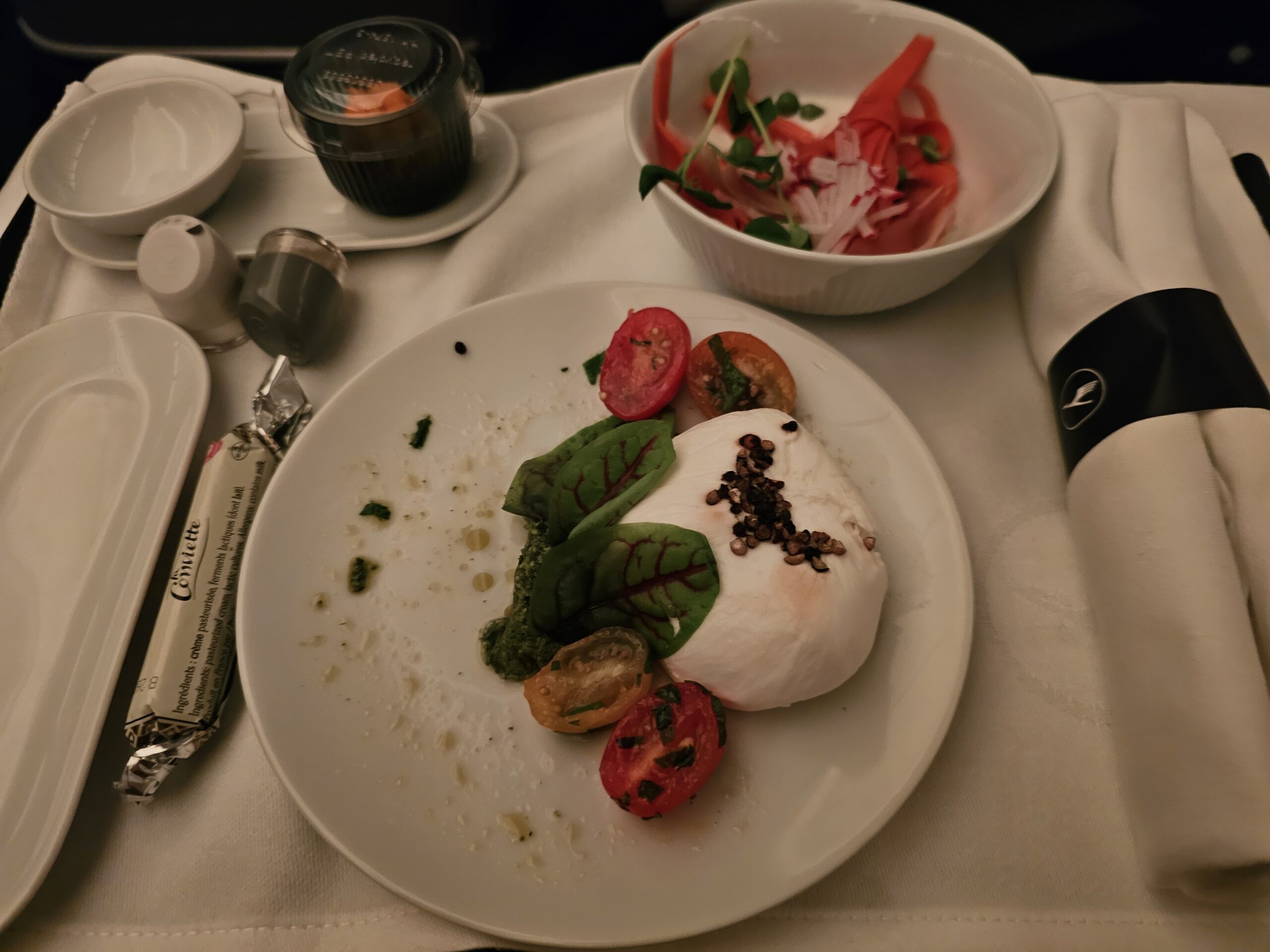
Flight attendants also usually ask whether to wake you for the second meal service, which takes place near the end of the flight. Given that on shorter flights it can take two or even three hours from takeoff until the first meal service concludes, sometimes it is better to tell them not to wake you so you can sleep a bit longer. However, I usually wake up from the clinking of dishes anyway. “Dine on demand” meals are also available, which you can request at any point during the flight; this allows you to skip the initial service entirely, go straight to sleep, and eat when you wake up. There is also an “express service” option where they bring a smaller selection but serve everything at once so you can go to sleep sooner. For example, a large portion of flights from the US to Europe depart in the evening, and since a flight from the East Coast to Europe can be just 6 hours long, this can be essential for getting some sleep—otherwise, you end up spending almost the entire flight eating.
Lately, printed press publications have not been offered on flights; everything has been made available electronically in advance to download to your own device. An entertainment system is available during the flight, but I don’t usually use it in business class because I am sleeping, so I cannot compare the selection.
- Other Perks: There are airlines in the world that provide a hotel room for business class passengers if there is a long layover between flights involving an overnight stay (where no such offer exists in economy class); I saw such an option in Taiwan some time ago.
- Loyalty Points: Typically, flights in business class earn significantly more loyalty points than economy, but you still need to verify how many points are awarded and make sure they are actually credited after the flight.
- Seat Selection: It is definitely worth reserving seats at the time of ticket purchase. Unfortunately, you cannot select a seat for free on all business class tickets nowadays! Here, too, airlines are trying to collect higher fees. It is worth reading reviews about the aircraft type beforehand and looking up the seat map on AeroLOPA or other sites. For instance, in bulk-head rows, the screen folds out from the armrest, which some people might dislike. Other planes might have a staggered zigzag configuration, and some seats face away from the window.
Unpredictable Aspects
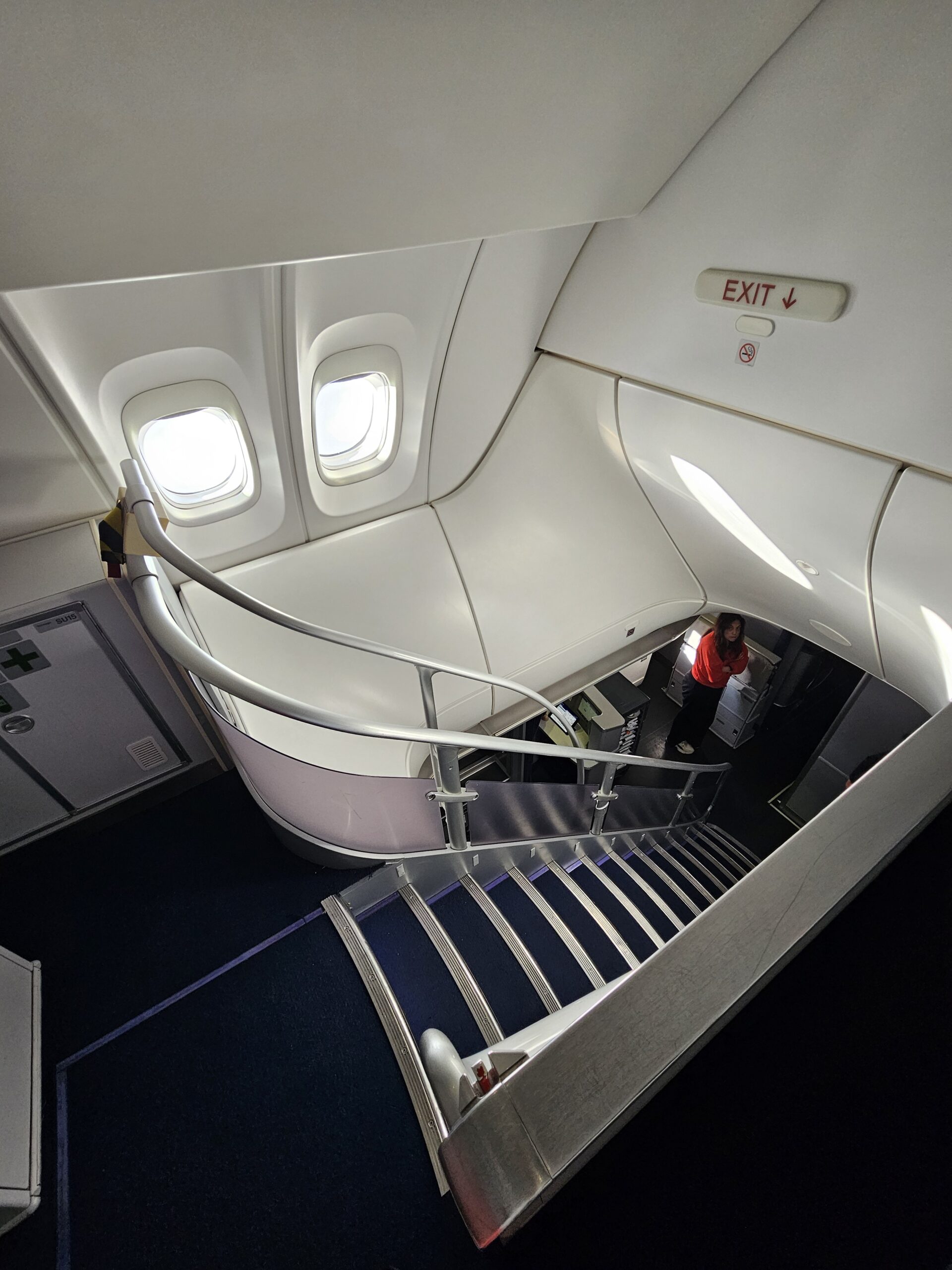
- If you have dreamed of flying on the upper deck of an aircraft and booked a ticket specifically for such a flight, the aircraft model can be changed! This should not be the sole factor when choosing a flight.
- Even if everything looks excellent on paper, there is no guarantee that you will manage to fall asleep. On a flight from New York to Amsterdam with United, there was a pronounced, strong vibration—it felt like I was sleeping on top of a washing machine. This was simply due to that specific aircraft configuration rather than turbulence, as the engines were felt distinctly in those seats. Thanks to a tailwind, the flight wasn’t even 6 hours long, resulting in very little sleep.
- On a flight with LOT, my seat recline didn’t work on the outbound leg. At all! A crew member pushed it slightly manually so I could at least stretch my legs a bit—which still forced me to sit in an uncomfortable position—and then lowered it flat by force once the meal was eaten. However, by takeoff time, the seat could no longer be brought fully back, and for the last couple of hours, I sat in a spot that had no more legroom than economy class. On the return flight, I noticed that on the exact same type of aircraft, two other passengers had issues with their seats. LOT offered me a 30% discount voucher for my next flight because of this (after I wrote a review about the flight to them).
- Special Meal Request: On a Lufthansa flight, even though I had requested a special lactose-free meal, it was not available. The flight attendant asked me several times whether I was sure I had purchased a business class ticket rather than being upgraded at boarding, and then told me that the meal hadn’t been catered and she couldn’t offer anything (on the outbound leg, this meal was provided, so the note about the special meal was definitely in the system).
Are Children Allowed to Fly in Business Class?
Yes! It is also possible to request a bassinet in business class and receive a 90% discount on an infant ticket. Although there are people who believe that children have no place in business class, no such restrictions exist, and you can safely use this product with children.
Mixed Class
Sometimes a business class flight might be available for the long-haul segment but not the short-haul one—for instance, if the specific airline does not offer business class flights at all. Check whether the perks will still apply on the shorter flight, especially if it is the first leg. Typically, the checked baggage allowance is determined by the longest segment, but each airline can set its own requirements for carry-on baggage.
Summary
Business class tickets are generally not a cheap pleasure, and to avoid disappointment with the product received, it is worth spending at least a short amount of time researching it before purchasing—will a lie-flat bed be available? What is included in the ticket price (cancellation, baggage allowance, lounge access)?
Lately, given frequent flight delays and cancellations, I try to choose flights covered by EU regulations—when departing from the EU, this applies to all airlines; when arriving in the EU, it applies only to carriers registered in the European Union. Likewise, I always pay close attention to layover times at airports; even though lounge access is a pleasant thing, I still do not want to spend 8 hours there between flights. My comfort zone is usually around 2.5 hours—that leaves a buffer if the first flight is delayed, provides enough time to stop by the business lounge, but prevents you from getting bored of it.
Similar articles