What is there to see in Chicago, the Windy City, which shares so many similarities with New York but often seems undeservedly overlooked by Latvian travelers? A whole lot! I visited Chicago for a conference but took the opportunity to spend the weekend in the city as well, and I can unequivocally say—it is well worth seeing!
Practical Information for a Trip to Chicago
- Flight: I flew to Chicago with LOT via Warsaw, which in my case was the most cost-effective option in terms of both time and price. This time I flew business class. I have described the business class experience in more detail in this blog post.
- Hotel: I stayed right in the center at the Millenium Knickerbocker Hotel, which is located directly next to the city’s main shopping street, the Magnificent Mile.
- ESTA: I already had an electronic travel authorization from a previous trip, which is valid for two years. A new one currently costs $40 and can be ordered here on the official website. You must look closely at which page you order it from, as there are unfortunately many intermediary and scam websites.
- Mobile Data: I have been using Airalo for many years. Buying an Airalo eSIM card for the first time? Use code ALINA7758 to get a $3 discount on your first purchase. It benefits both you and me! I also have an individual discount code: REVERIECHASER, for an additional 10% discount when purchasing via this link! I have managed to use multiple codes at once, so if you are a first-time buyer, try using both ALINA7758 and REVERIECHASER together (separate them with a comma)! The code REVERIECHASER also works for existing customers! Please use this link for your purchase. This way I will receive a small commission, and you get a discount!
- Money: Although you can get by with a bank card in most places (I used Revolut), none of my three payment cards issued in different countries worked in the metro! The machine asked for a zip code, and neither zeros, a standard local code, nor my actual zip code worked. Therefore, cash always comes in handy—and precise cash at that, as many machines did not return change.
- Transportation: I used the metro (you can buy a 1-day pass or a multi-day pass), Uber, and also walked a lot on foot.
Excursions worth considering:
- A 1.5-hour Chicago River cruise focusing on the city’s architecture
- 360 Chicago observation deck
- If you plan to visit many museums, consider purchasing the Chicago Pass!
I’m in Chicago!
“Did they make you show your social media accounts? What did they ask?” The messages pour in one after another when I post a short story on social media announcing that I have landed in the United States (USA). No, they don’t make you show your social media accounts, and they only ask about the purpose of your visit (a conference and later a business trip to another state) and your return date. This is roughly my twentieth time visiting this country, so the quick screening does not surprise me.
I am in Chicago on a Tuesday evening; it is 5°C, and I am shivering in the wind at the designated Uber pickup zone by the airport alongside other passengers. Someone is in flip-flops and shorts, clearly returning from a warmer country since it is currently spring break week in the US. Another passenger, much like me, would have been better prepared for the weather that ruled here just a few hours ago—plus 20 degrees. Others, likely from warmer climates themselves, are bundled up in down jackets and beanies. I will observe the exact same contrast on the streets of Chicago over the coming days because spring here is deceptive. As the trip approached, the weather forecast grew worse by the day—the initially promised 20 degrees turned into 14, then just 6, and finally 3 with added rain. After a forecast like that, things could only get better!
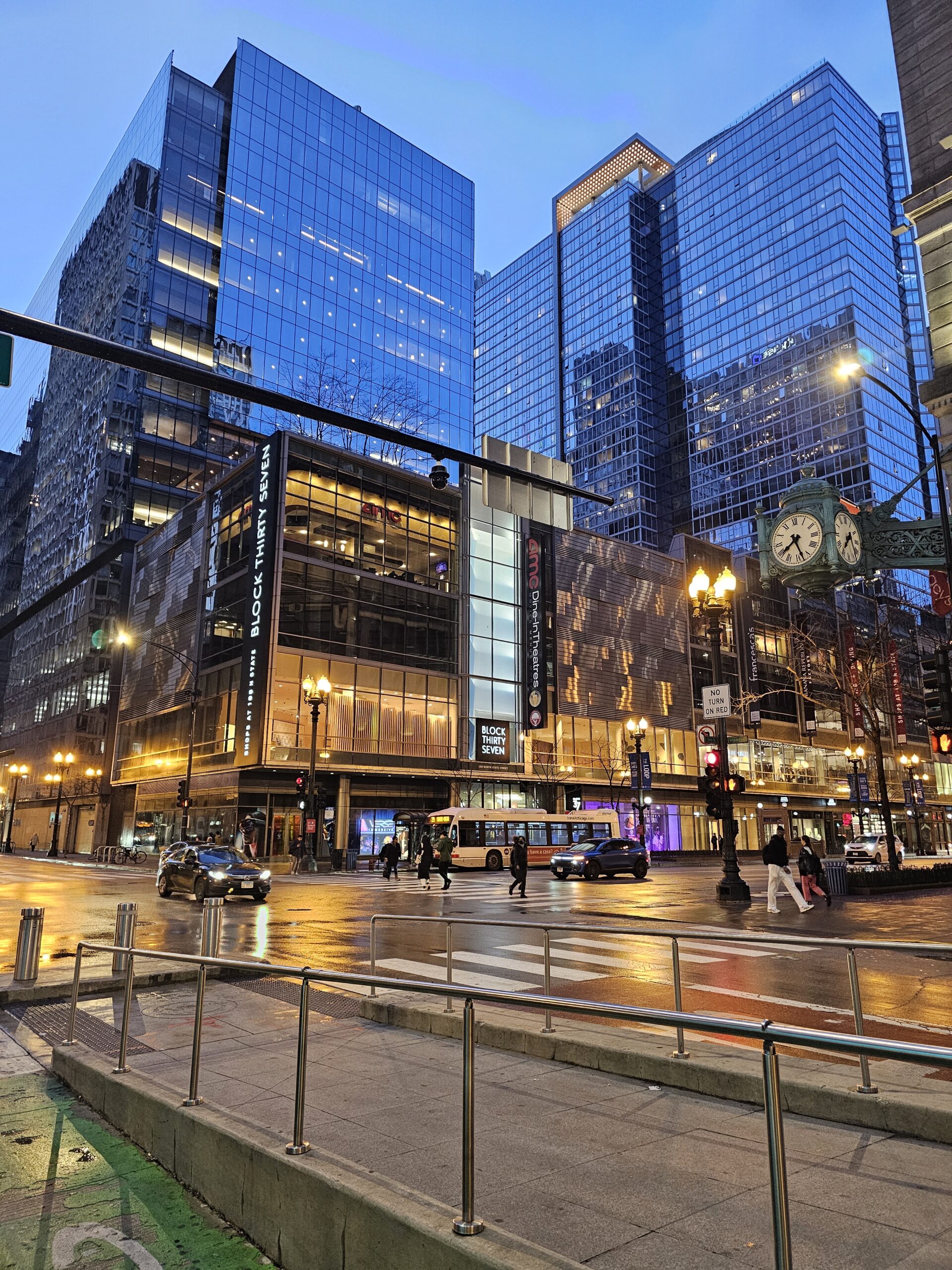
The first couple of days pass under the banner of the conference and quick dashes to the nearest restaurant around the corner from the hotel, as the temperature hits a mere 3 degrees on some afternoons. Later, closer to the weekend, I can finally focus on sightseeing. I am in this city of nearly three million people (or nine million, if you count the suburbs) for the very first time. I have flown through its airport many times, but this is my first time in the city itself. Since there is only one weekend between the conference and the next part of my business trip in New Jersey, I sacrificed an eighth visit to New York in favor of exploring Chicago, since New York would have been relatively close to the later part of the trip. As it happens, New York is exactly what I will end up comparing it to the most, and—spoiler alert—it was absolutely worth dedicating time to exploring Chicago!
Right from the first days of the trip, everything around me unmistakably reminds me that I am in the US. A glass of water is brought to the table at breakfast without asking (with ice, of course), the bill appears when I am only on about my fifth bite of chewing (“no rush!” is the comment), and the bill always includes the inevitable space for a tip. In many places in the city, a menu automatically pops up when paying, asking how much tip you want to leave, often starting at 18%. For the uninitiated, this bill holds another surprise—prices in the US are displayed without tax, and depending on the state, an average of 6% to 9% can be added. If you count your money precisely while putting items in your basket in a store, you will have to give something up at the checkout. On the other hand, once you write your desired tip in the restaurant bill slot, you put your payment card back into the folder it was brought in; the waiter takes it away and returns with the receipt. In Europe, people are used to going to the register themselves or using a mobile payment terminal.
The Magnificent Mile
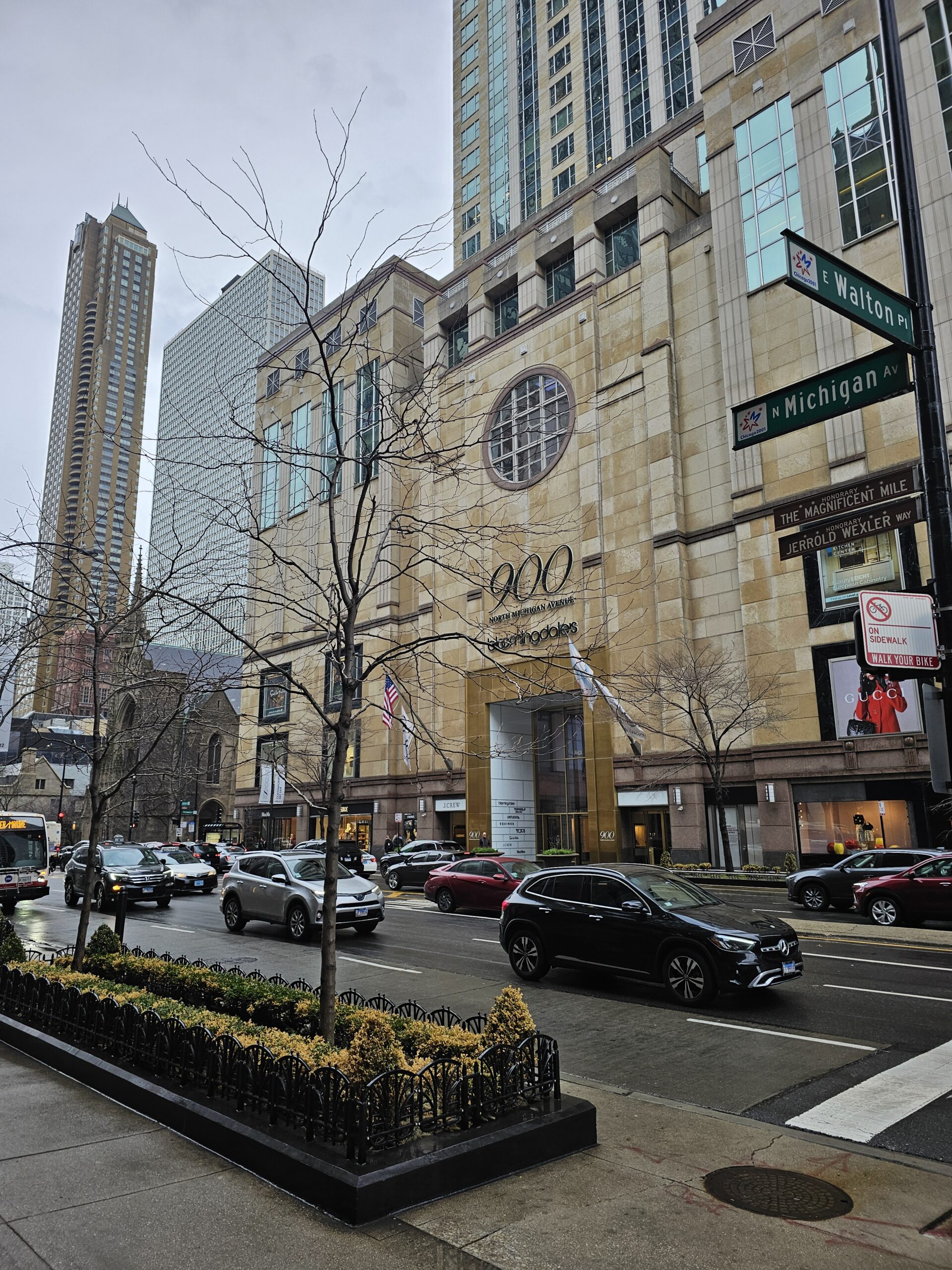
My hotel is located right next to Chicago’s famous shopping street—the Magnificent Mile. I walk past the Bloomingdale’s store, where flowers are already being planted in window boxes. Right next to it is a Louis Vuitton store, and opposite is a Vacheron Constantin watch boutique, where the fine timepieces are removed from the display window for the night. Many people ask me—is Chicago safe? As usual in the US, it depends on the neighborhood. However, my first trip on the metro indicates that it looks cleaner and calmer here than in New York. That said, the ticket machine doesn’t want to cooperate with any of my three bank cards, and the contactless gates don’t read our cards or the Google Wallet app either. After a few attempts, I decide not to waste time and pay with cash. Later, several people write to me saying they encountered a similar problem—the machine asks you to enter a zip code, won’t accept your real one because there aren’t enough characters, and the internet tips to enter zeros, nines, or a local code don’t work either. Even in a cashless world, a banknote comes in handy from time to time—but importantly, exact change, because the machine does not return change. At least one good thing: the $5 metro card allows unlimited rides for 24 hours.
The Art Institute of Chicago
I discovered that the Art Institute of Chicago, considered one of the best art museums in the world, stays open later on Thursday evenings. This allows me to optimize my free time on the other days, especially knowing that jetlag will sneak up on me unnoticed in the evening. Strike while the iron is hot, while I’m still awake and fueled by the adrenaline of exploring a new city!
It rained during the day, but it stops just as I leave the hotel. Walking from the hotel to the metro, and then from the metro to the museum, I turn my head in all directions, soaking in the impressions. It feels like I am in a slightly different version of New York. Tall buildings, large signs, the elevated metro line known as the “L”, and a lot of metal details in the building finishes. When I arrive at the museum building, I almost have to pinch myself to make sure I am not at the sister of the Metropolitan Museum or at least a cousin of the New York Public Library, because the overall impression is very similar if you look past the details. A park stretches behind the museum, where it looks like the trees are about to burst into bloom at any moment. Are those actually cherry blossoms? If so, it’s a bit of a shame the warm weather didn’t hold up.
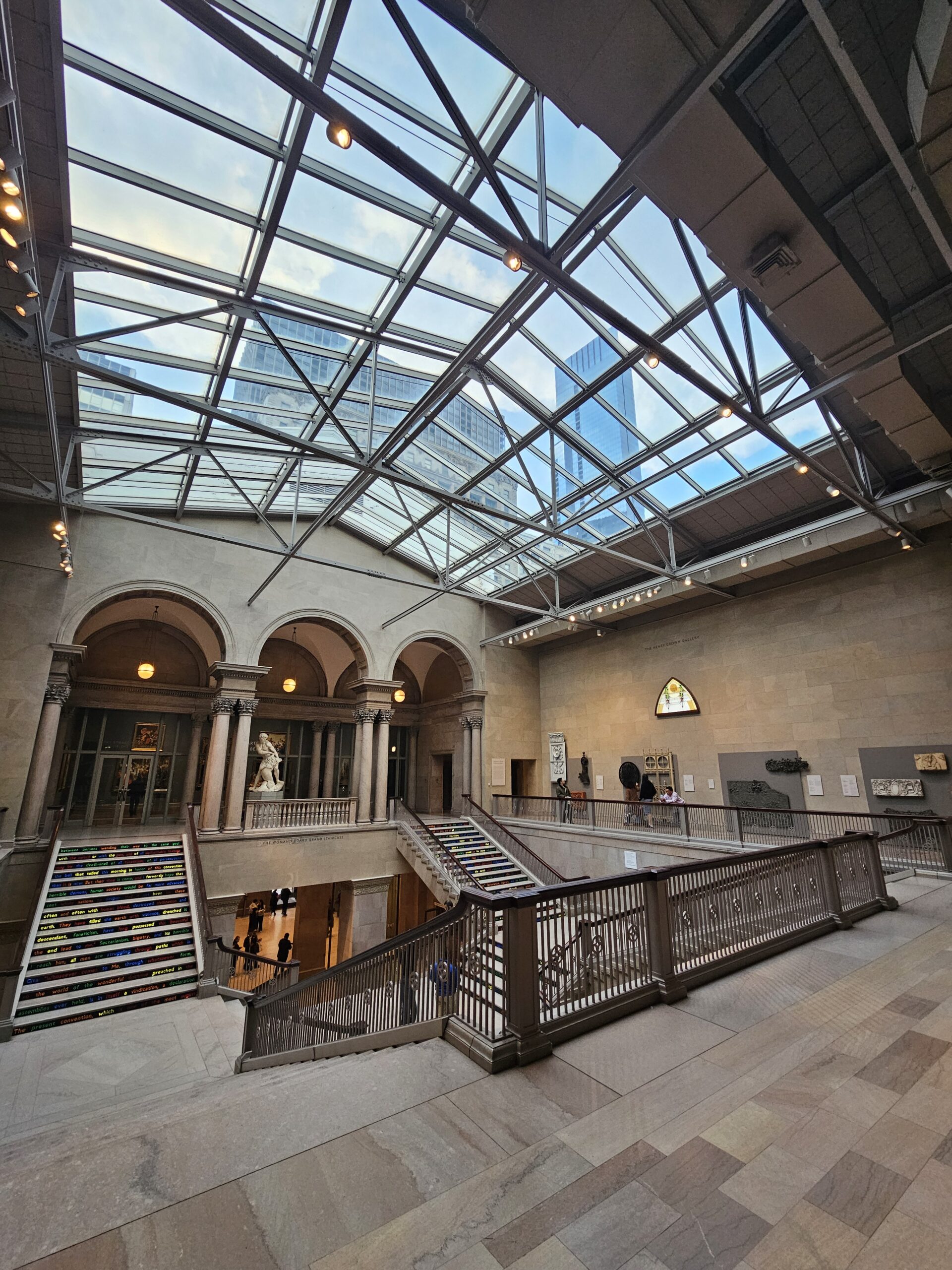
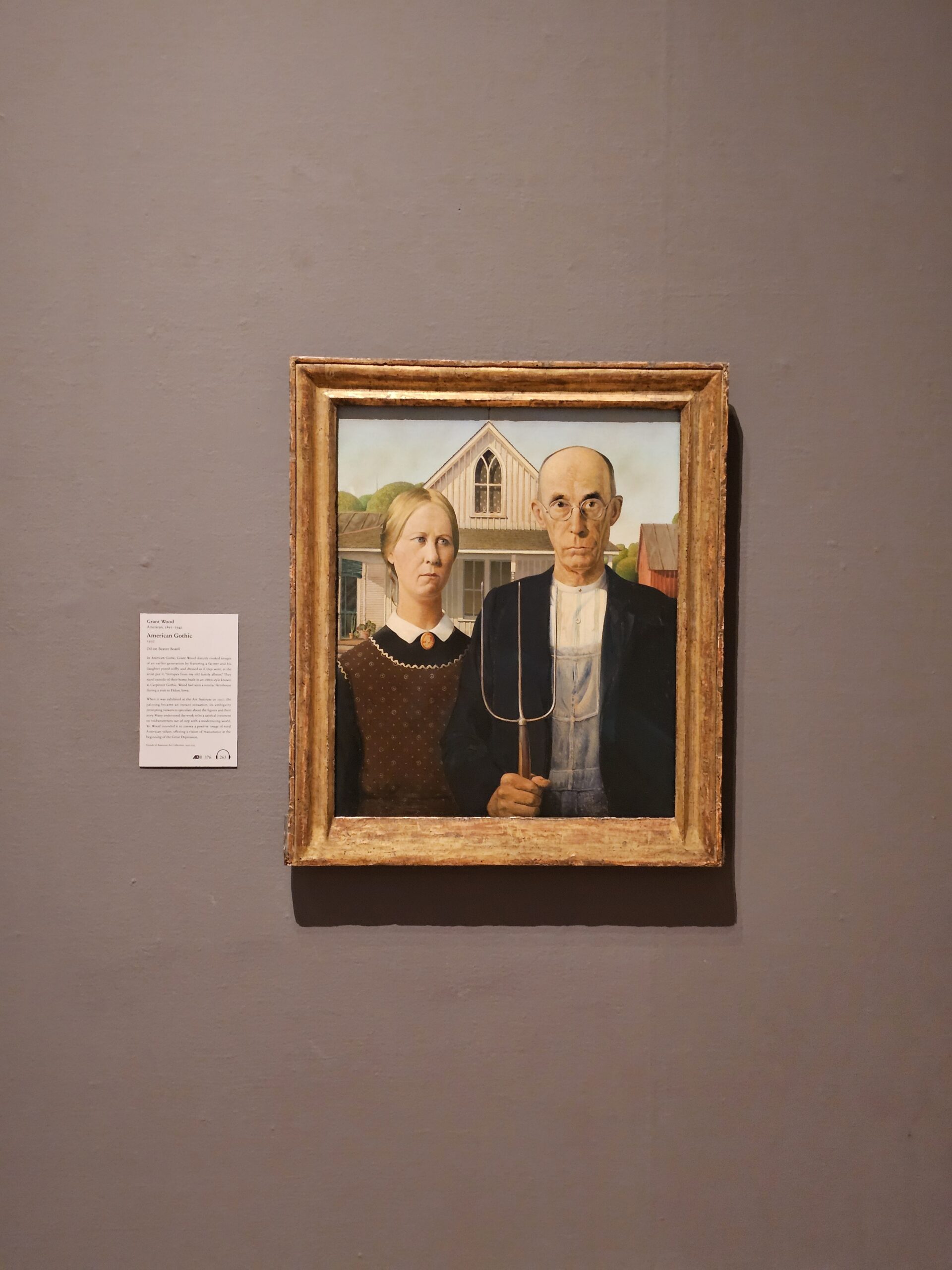
The museum certainly cannot be seen in a single day or even a single week. I crisscross through many of its halls, paying attention to artworks that caught my heart from other exhibitions and glancing at Google to find out which artists’ masterpieces this museum is particularly famous for. The collection here is such that the museum truly rivals many world-renowned institutions. It feels like every artist I can think of off the top of my head is here. On the first floor, I have already viewed a special exhibition of Henri Matisse, and I have visited the works of Monet, Van Gogh, Cézanne, Seurat, and Picasso. I linger especially long in front of Raqib Shaw’s monumental Paradise Lost, which takes up nearly half of a wall in one hall. The piece seems to feature Dalí-esque elements and an Indian sensibility (the artist was born in Kolkata, lived in Kashmir and Delhi, and then moved to London), blending into a complete flight of fantasy. I look at the gallery of Japanese prints, where a work by Oda Kazuma reminds me of Van Gogh’s The Starry Night (on display at New York’s MoMA) because of its color combination. I visit the Korean art room and make a point of walking to the American art gallery, which houses one of the nation’s most famous works: Grant Wood’s American Gothic. It depicts a solemn man in round glasses holding a pitchfork, with a woman beside him—whether she is his wife or daughter remains a matter of debate. The painting is said to be intended as a satire on small-town life.
The Bean or Cloud Gate
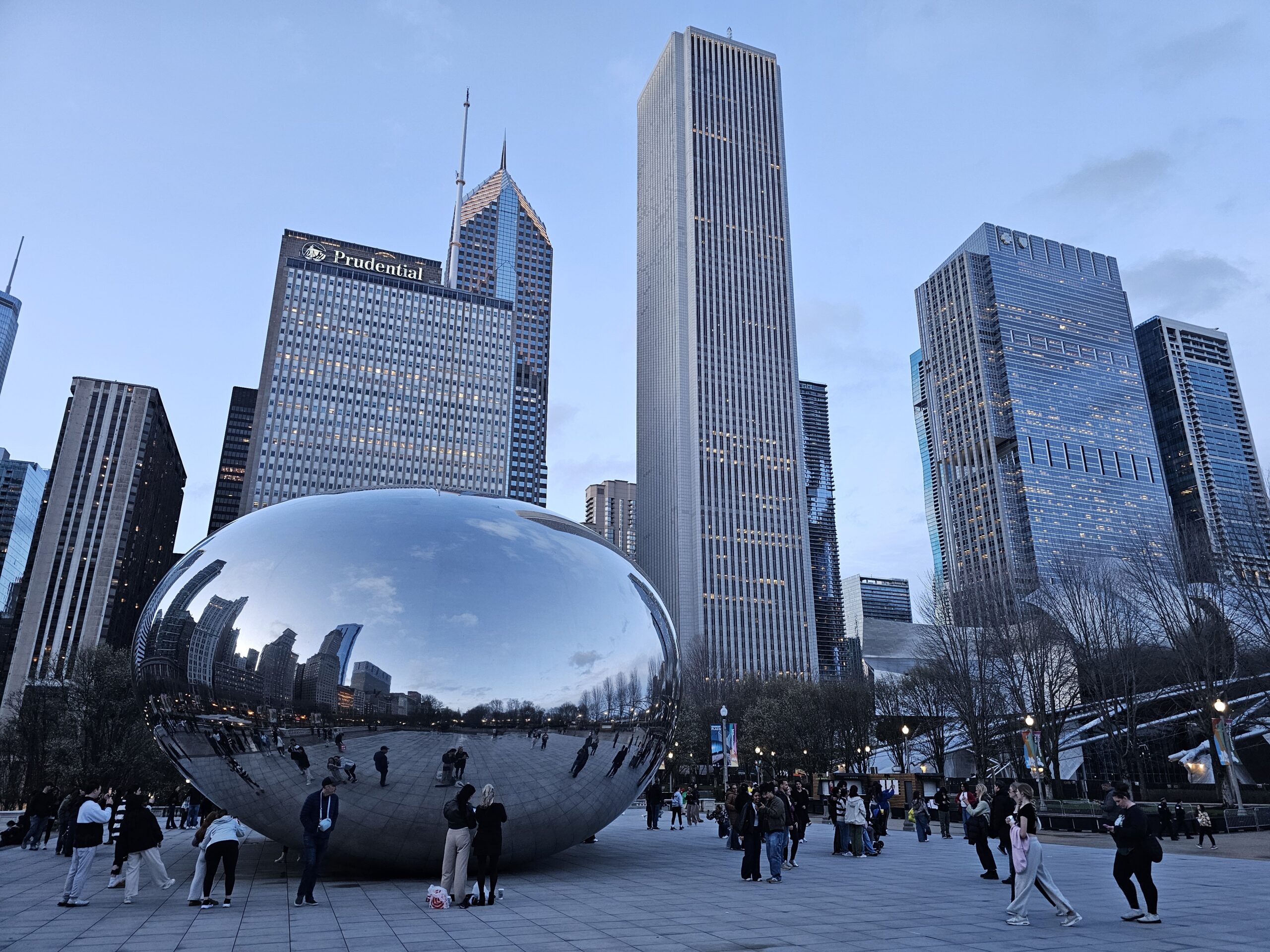
Once my art cup is filled for the day, I head to the adjacent Millennium Park, home to Chicago’s most recognizable sculpture, Cloud Gate, also known as “The Bean.”
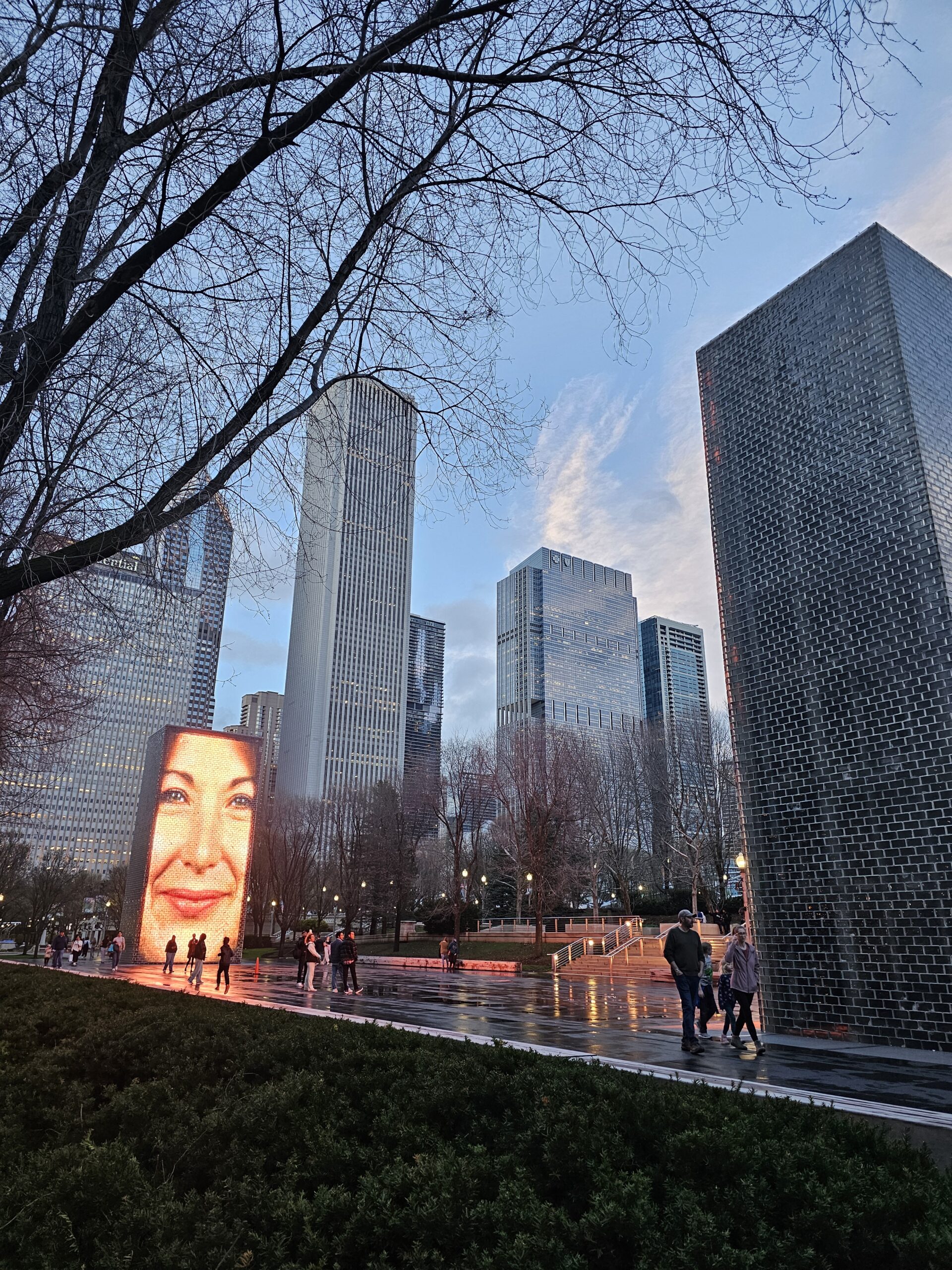
Along the way, I watch the city’s reflection in puddles in the middle of the sidewalk. The sun has just set and the sky is turning a light shade of blue, highlighting both the shiny skyscrapers and the bright city lights. The wind blows relentlessly, making you lose your footing, and clouds sprint across the sky. The screech of wheels on the tracks is clearly audible at the turns of the “L”, a particularly piercing ambulance siren sounds from time to time, and spring bird songs echo from the park trees. I check to make sure the singer in the bush is real and visible, not some speaker playing recorded music. It always surprises me how many birds I see in the US.
The strong wind forces me to quicken my pace, and soon I reach the famous Cloud Gate, around which close to 90% of the park visitors are standing. People are taking photos, filming, walking underneath it, or simply observing. The sculpture was created by British sculptor Anish Kapoor. The artist’s inspiration was liquid mercury, and the goal was to create an object that disappears and reflects the surrounding environment. After the mirrored views I just witnessed, it feels fitting. The author reportedly disliked the sculpture’s nickname “The Bean” at first, but eventually accepted it.
I have to decide what to do next. While waiting for the green light at a pedestrian crossing, I observe my surroundings. A few crocuses and a rather lonely daffodil dot the flowerbeds. Tulips have sprouted but are not blooming yet. The branches of certain sheltered trees are starting to bud; you can tell by the buds that a blossoming explosion is about to happen at any moment, wrapping the entire city in a swirl of white petals. What a shame I’m not here a week or two later!
Looking at Google Maps to see where the nearest metro station is, I notice that I have marked some shops that better suit my interests and wallet, such as a TJ Maxx store. (These and several other similar stores are known as off-price retail stores, where you can buy clothes for a much cheaper price, including well-known brands, often at the same time they are available in finer places). It requires a few blocks of walking, so I decide to drop in there first and then think about food. Inside the store, the warmth catches up with my fatigue. In Latvia, morning is already approaching, but here I haven’t even had dinner yet. I sluggishly look through a couple of shelves and realize that I will have to dedicate another time to this activity when I am not falling off my feet. On a quick walk to the metro and an equally quick ride to the required stop, I am a bit desperate about what to eat. I don’t see anything decent on the route to the station. Closer to the hotel, there are two extremes: hot dogs or places marked with three dollar signs in the reviews. Exiting the metro station, the first thing I see is a McDonald’s. However, it is operating in a semi-closed mode—you are no longer allowed to dine in, and food is only available for takeout. While waiting for my order, I watch a lady ahead of me get ice cream for herself and also a “pup cup”—a small cup of ice cream for her dog. Soon my order is ready. I notice that it contains two packages of french fries (I ordered one), and they tell me to keep them. The food inside is thrown together, though, and upon receiving it, I see that one portion of fries has completely spilled inside the paper bag. At the hotel, I eat half of the burger, realize that this won’t be a great dining experience because the food tastes different than what I am used to in Latvia, and place the bag outside the front door. Before I go to sleep, I want to see what is rattling outside the window—it turns out to be rain. Just as I entered the hotel, it started pouring. I got lucky!
A Gray Morning
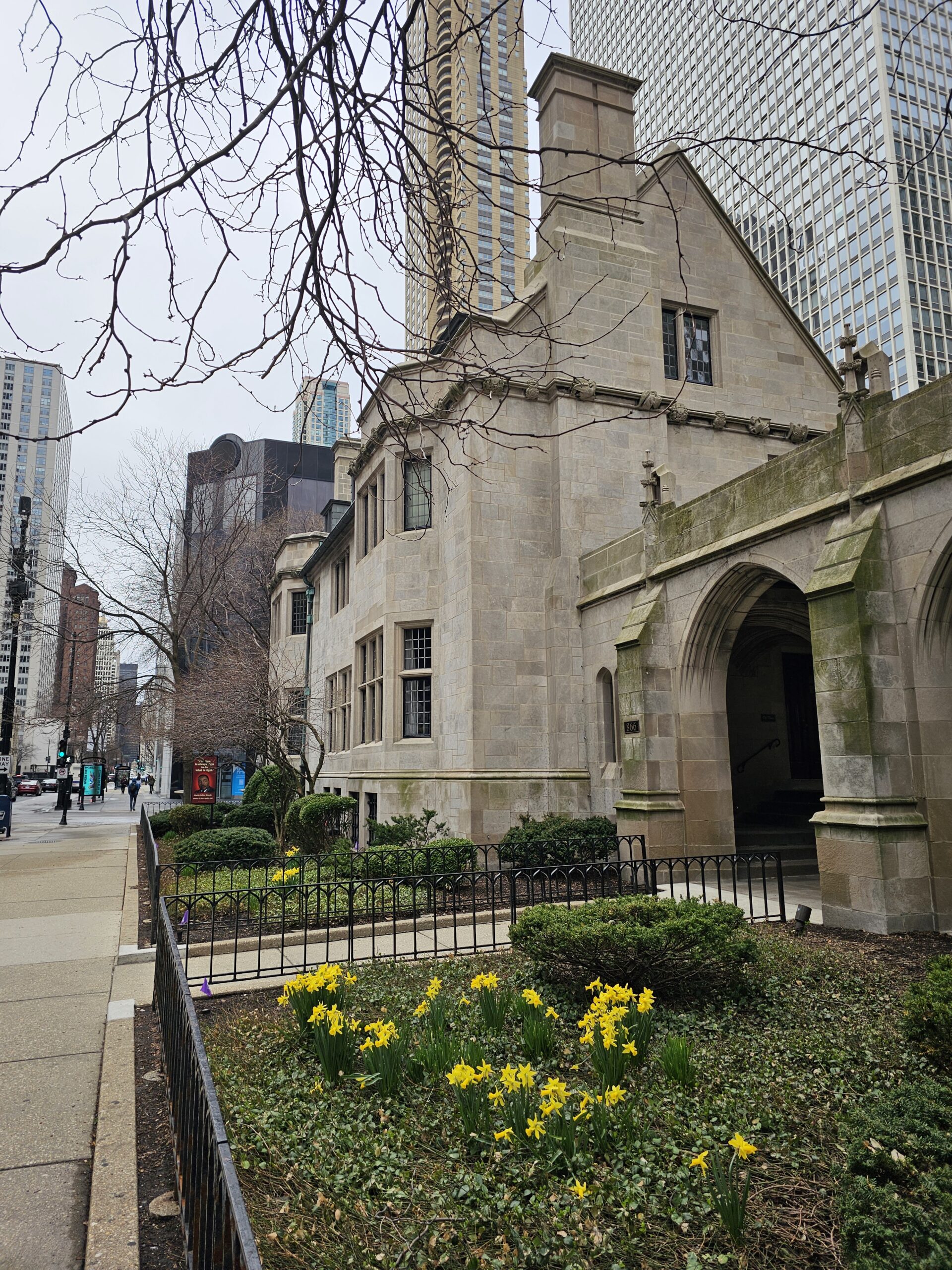
The next morning, after a hearty breakfast, I am greeted by overcast skies, a chilly 10 degrees, and the endless wind. Chicago sits on Lake Michigan, from which a serious wind blows from time to time, but it was nicknamed the Windy City not because of nature’s winds, but rather due to the windy speeches of its politicians. Shivering on the way to the metro along a straight stretch of street, however, the nickname feels entirely earned, even if Chicago isn’t among the top 10 windiest cities in the US.
On the way to the metro, I notice a sticker slapped on some glass—”F***k ICE – no human is illegal.” In recent years, demonstrations against ICE (Immigration and Customs Enforcement) officers who deport people have intensified. During the trip, I receive several warning letters from an automated security system where my trip is registered. They advise me to be careful at airports because demonstrations against ICE are possible there due to a shortage of security screening staff caused by delayed budget approvals, as ICE personnel have been brought in to help control the situation. I don’t notice any activity related to this in the city or later at the airport. Similarly, there are no security lines like the ones warned about in the news. The only reference to these events during the entire trip is this tiny sticker in the display window of a closed store.
When I get off at my metro station (the metro card indeed keeps working for 24 hours, as promised!), it is drizzling very lightly. But during the 15-minute walk to the aquarium on the lakefront, the weather rapidly improves. The sky clears, and I decide to dedicate a few minutes to exploring the area first. The weather forecast promised a two-hour window of overcast skies with a few sunbeams; it seems that moment has arrived, and I want to take the opportunity to enjoy the good weather before it vanishes, as the forecasts for the coming days are not encouraging.
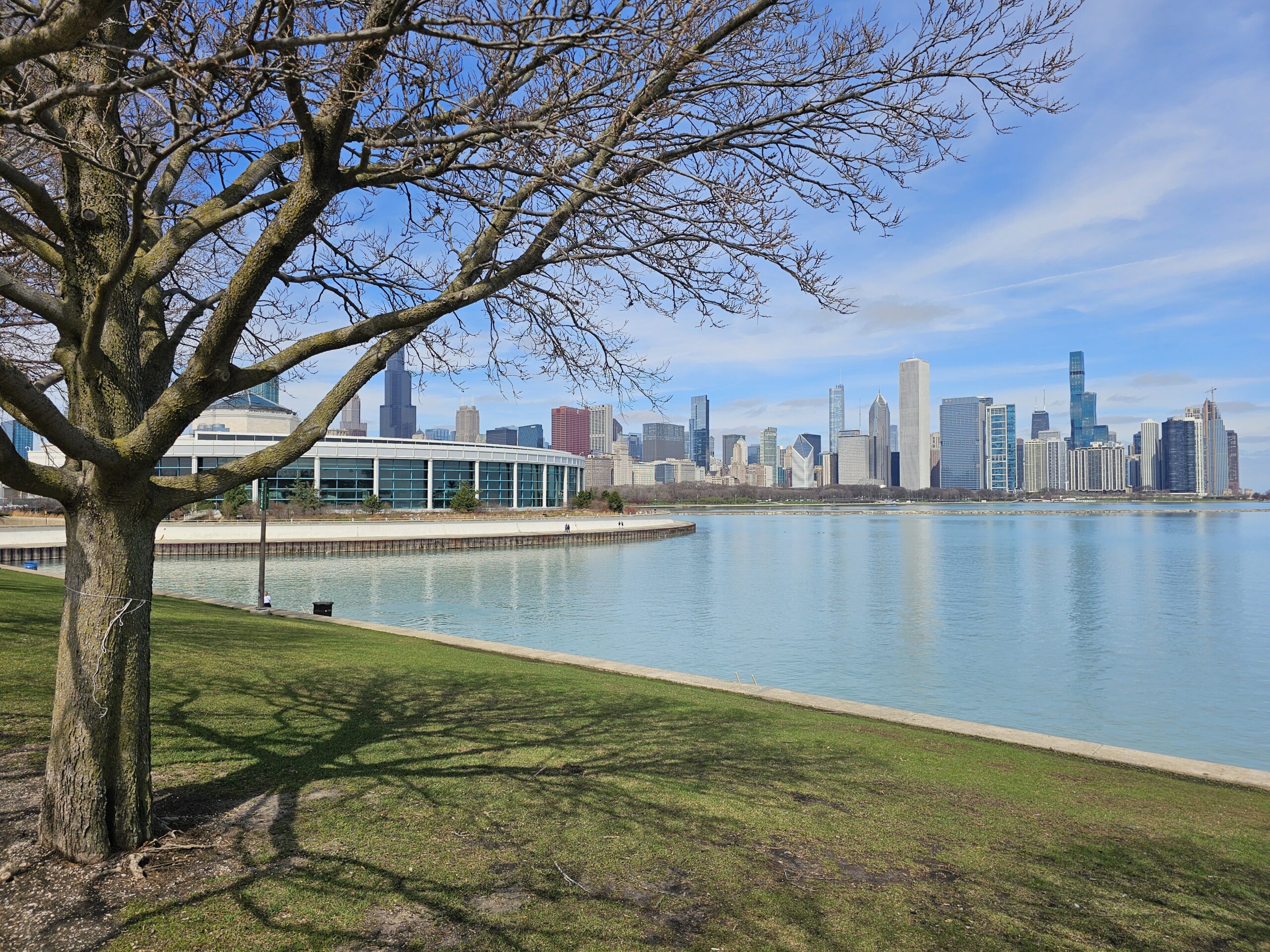
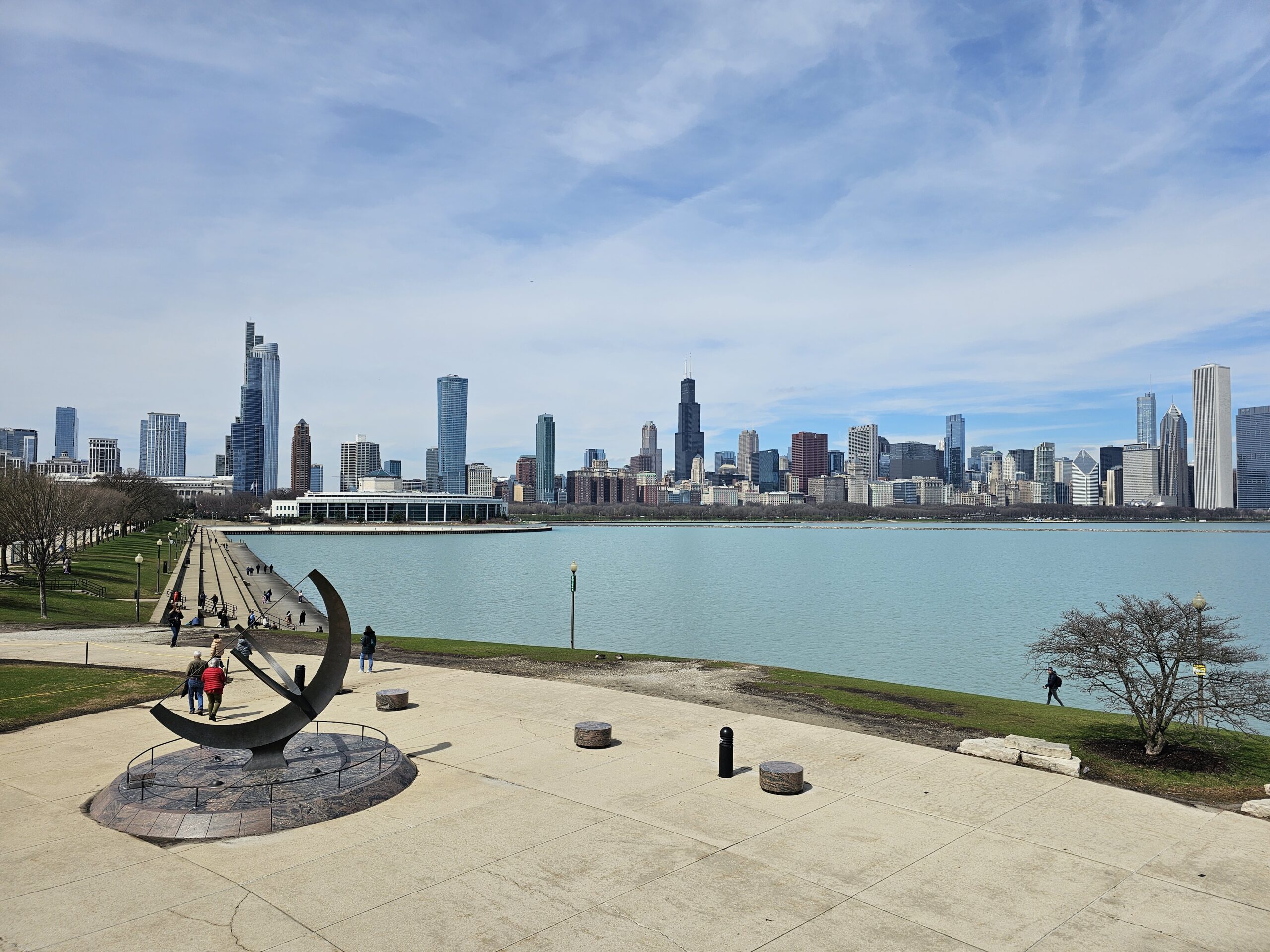
Being on the lakefront, I am surprised by the unusually blue color of the lake water. I am used to seeing them light brown or dark, but this water looks like it belongs in a tropical country. And, of course, the huge size of the lake makes it feel like you are standing on the seashore as the water ripples. All of the Great Lakes I have seen so far leave that impression. In the summer, there is a boat dock here, but for now, the promenade is used by cyclists and an occasional runner. However, the paths are covered in deep puddles and even washed-up dirt in many places—it rained heavily overnight.
The Aquarium
When I arrive at the Shedd Aquarium, I am a bit surprised that everyone goes straight inside instead of heading to the ticket counters, which are completely empty. I chose Friday for my visit, hoping for fewer visitors (compared to the weekend). I also found out that Good Friday is not a public holiday (unless people take it off themselves as one of the so-called “floating holidays,” which allow employees to choose several holidays as days off depending on their faith). It turns out tickets to the aquarium are sold out until three o’clock in the afternoon! However, a staff member somehow manages to find one free slot for me; she says that sometimes people cancel. I assume she simply takes pity on me as a tourist who came all by herself. Guilty as charged—I only checked the opening hours but did not research the ticket purchase conditions, assuming it was still the off-season and there shouldn’t be too much demand. In the summer, you definitely need to buy tickets well in advance both here and for the art museum!
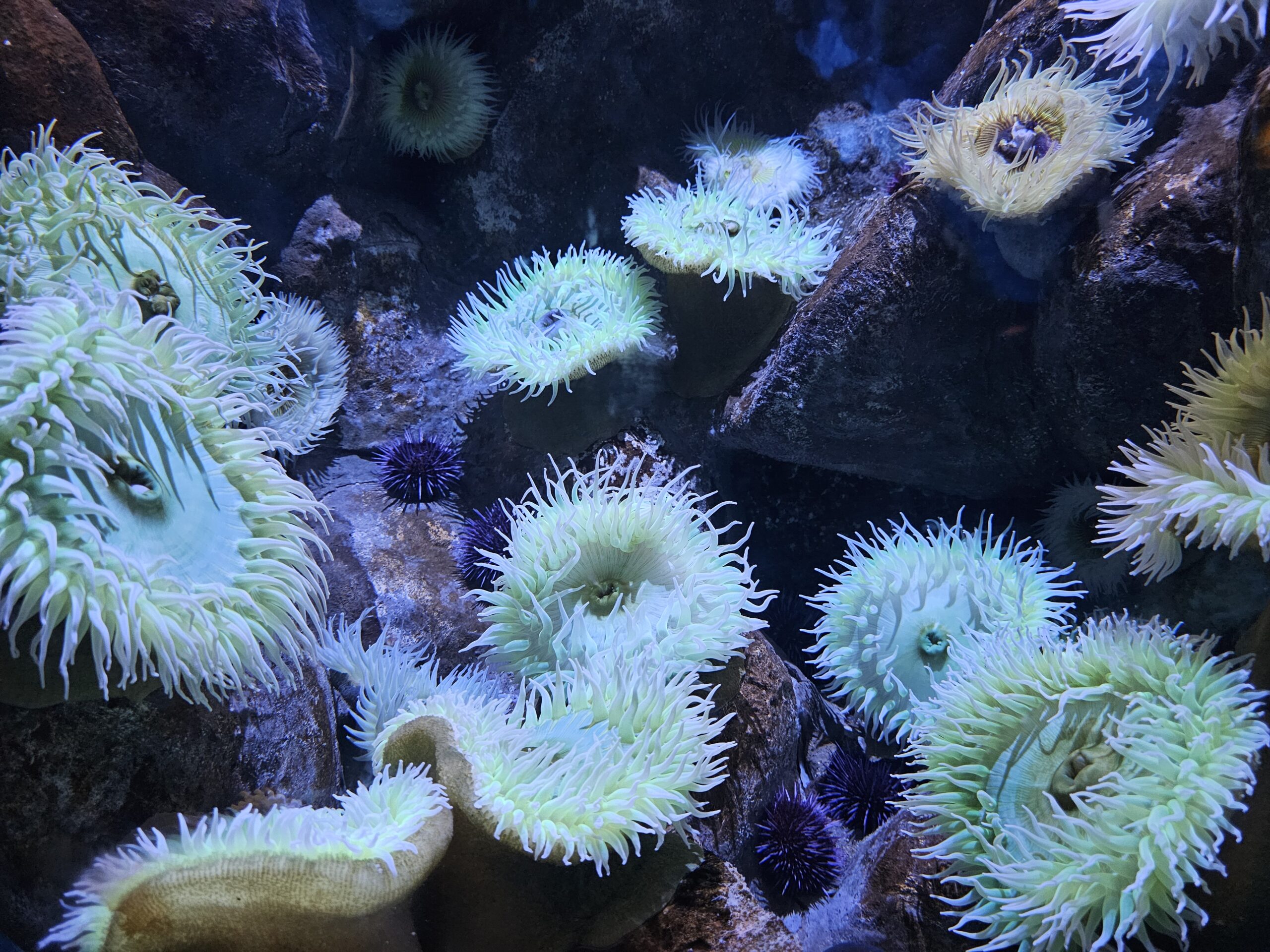
I hadn’t read much about the aquarium beforehand either, just letting myself experience whatever was there. I start by leaving my jacket in a locker. There is no cloakroom, only lockers that cost $6. Luckily, you can open them multiple times, because the first time my locker accidentally snapped shut. Next, I question a staff member holding a large “Ask me!” sign about what is worth paying attention to. I am told to start with one of the shows, as one is about to begin right at 10:00. Twenty minutes before the start of the show, part of the stands is already occupied and soon fills up completely. During the roughly 10-minute show, they talk about Pacific white-sided dolphins, which jump into the air a few times. A couple of questions are posed to the audience, and a presentation on nature conservation is given, stating that the main thing any individual can do is turn to their leaders to make them take action. I don’t entirely agree with this statement and consider it a topic where we can influence things individually, especially seeing the large amount of trash on the roadsides, but every country has its own order.
After this show, I view the beluga exhibit, starfish, and jellyfish. I learn about how the aquarium cares for the preservation of species diversity, what research work takes place here, and how the animals seen here are not caught in the wild. In many countries, maintaining once-popular aquariums has become a serious problem if they are solely for entertainment; poor management leads to animals being neglected, parks being closed, and activist groups filming outdoor aquariums from drones to assess the situation and try to find a solution. Often, the inhabitants of these aquariums were caught in the wild. Elsewhere, they were rescued from markets, such as the Georgia Aquarium’s whale sharks, which were rescued in Taiwan (whale shark hunting was banned in the country in 2008, and the animal has held protected status since 2020).
With every minute I spend in the aquarium, it gets more and more crowded because everyone is entering but no one is leaving. Soon it feels like I am trying to push my way through a packed train station. For $55 plus the jacket locker, I have learned a thing or two about the habits of various aquatic animals and seen a few of them over people’s shoulders, and I feel quite exhausted. There are a lot of people here. Maybe not as many as in New York, but tourists clearly travel here too, though it looks like the crowd is mostly Americans from other cities.
When I leave the aquarium, it turns out that the promised slightly cloudy weather has turned into completely blue skies with fantastic views of the skyscrapers from the aquarium side. I walk over to the Adler Planetarium, though I decide to skip the planetarium itself this time because the weather is too sunny to stay indoors. Before moving on, I decide to grab a quick bite at the planetarium cafe, which is supposedly famous for its city views and delicious food. After waiting a few minutes, I receive my ordered pizza with a few nearly transparent pepperoni slices and what feels like half a kilogram of grated cheese, and I realize that this won’t be the right place for me and my definition of “delicious food” differs. This time I explicitly feel the difficulty of finding food that doesn’t fall into the junk food category; I trusted that something would pop up along the way, but it looks like this matter also required timely attention. I am also slightly surprised by the selection of alcoholic cocktails in cans at the museum cafe, but perhaps because of the shows, it is much more of an entertainment venue for the whole family, not just younger groups.
Along the Chicago River
A few minutes later, an Uber picked me up. I want to make it to another top Chicago activity, and once again, without a prior reservation, because I decided to reschedule my sightseeing list due to the sunny weather. The car drops me off right by the stairs leading to the ticket office, and within a few minutes, I have a $57 ticket in my hands for a 90-minute architecture tour along the Chicago River. While waiting for boarding to begin, I observe the surroundings. The Lithuanian flag is flying on the opposite bank of the river. Is that just how it looks to me? No, truly! The Lithuanian consulate is located there.
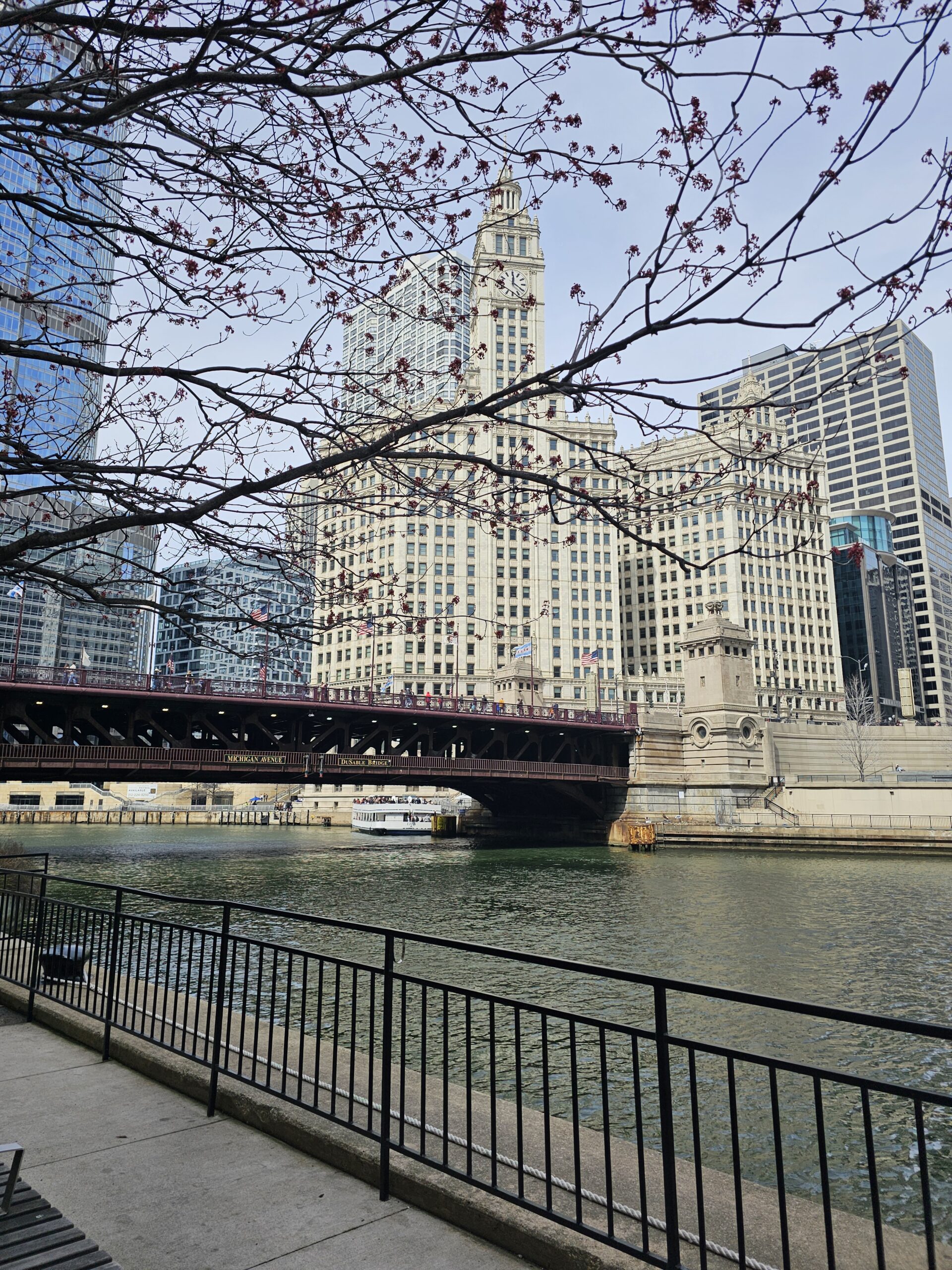
Boats cruise along the river, and you can see that life definitely bustles here in full swing during the summer season with open cafes; it’s not for nothing that this place is called the Chicago Riverwalk. It reminds me of what I saw in San Diego with the same name. As I learn later on the tour, San Diego was precisely the inspiration for creating such a space along the river in Chicago.
Standing in line, I got a bit cold, so when boarding begins, I head straight to the glass-enclosed bar area for some tea. I heard over the loudspeakers that there will be enough room for everyone on deck, and I trust that a chair will be found for me too.
Later, the guide says he is surprised by the interest from so many people, meaning that quite a few must have the day off. But a spot is indeed found for me, and at least I sat in the warmth for ten minutes with a mug of tea before the boat departs from the dock and I am ready to freeze for a bit.
The boat tour is truly on the must-do activity list, and for good reason! This tour is led by a volunteer guide, an architecture expert, who not only draws attention to the most famous buildings and their details but also reveals various facts related to the city’s history. From the conflict with the state of Michigan when the flow of the Chicago River was reversed and all the city’s sewage flowed into the lake, to the city’s growth and the former headquarters of the once-largest US shopping catalog located right here.
I spend two-thirds of the tour on deck. At times, it is quite cozy in the sun until the boat turns to travel in the opposite direction down a branch of the river to return to the dock, and it feels like the wind cuts right through your bones. I shiver for a couple of minutes and realize that since we are traveling back along the same route anyway, I have seen everything—the main thing now is to listen to the narration. I stand up and head to the glass-enclosed area. It seems my standing up signaled to half the deck that it was acceptable to do so, and they begin to stand up and head downstairs as well.
Underwear Battles, Coffee, and Tourists
I gradually start making my way back toward the hotel, dropping into two more discount stores. In one, Ross, I am greeted by paths so narrow and crowds so massive behaving as if they are ready to fight over the underwear rack that I decide it’s time to move on. A few blocks away is Marshall’s, which feels like an oasis of calm. Here I encounter the typical American art of small talk. Once again, by the underwear rack, a lady strikes up a conversation with me about what fibers things are made of nowadays and why it is so difficult to find something made of cotton. We conclude that a cotton composition can most easily be found by looking for the blandest design.
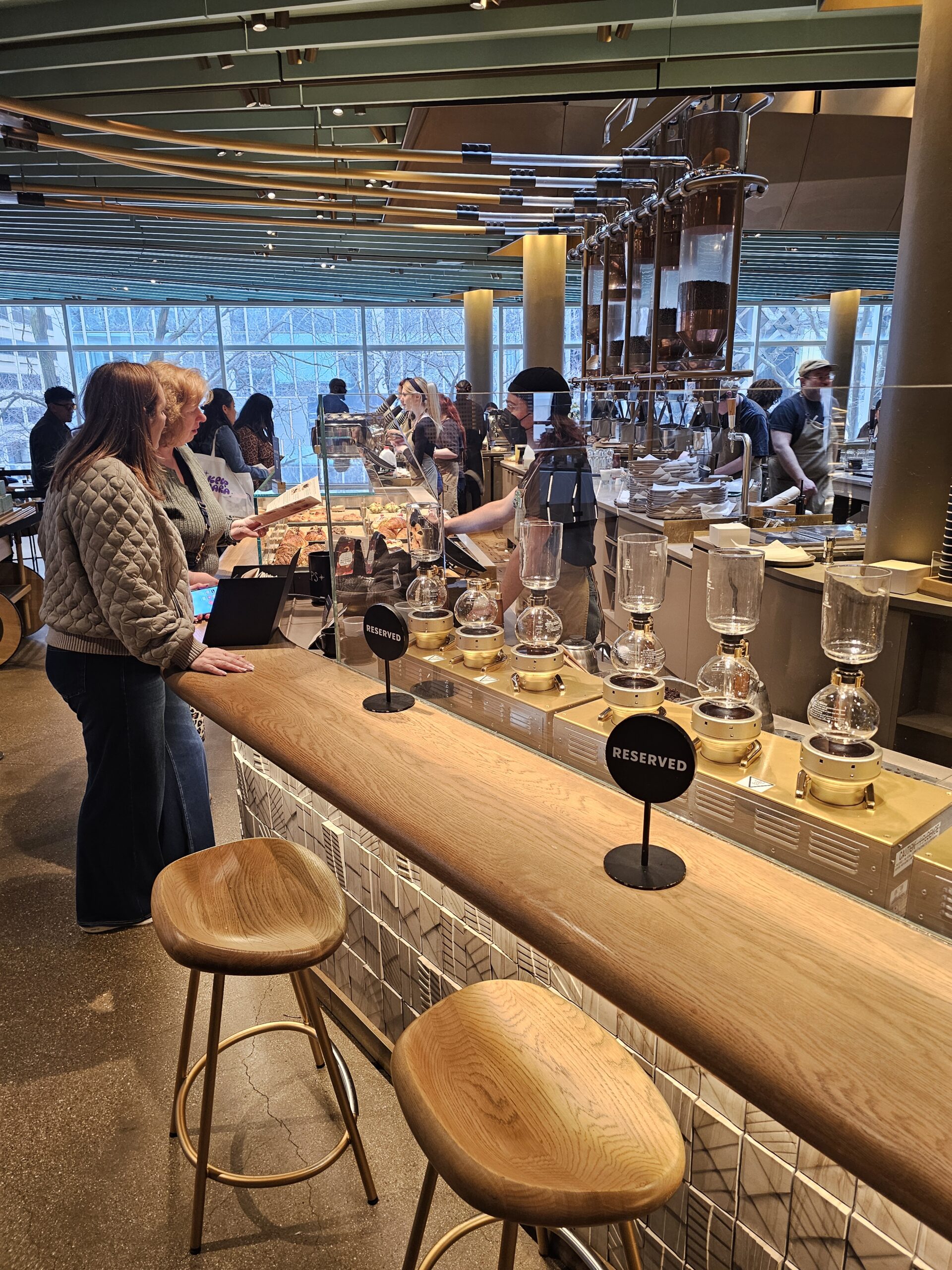
A few blocks further, just as I am determined to head straight to the hotel, I notice an object that I had also marked on my list of places to see—the Starbucks Reserve Roastery, a special multi-story coffee venue offering tastings, souvenirs, and snacks. Even though I don’t drink coffee at all, I thought I could have a hot cocoa and a pastry, but alas—the tourist crowds here are such that the chances of finding a table are zero. I see people circling with trays holding huge, decorated croissants; I see families who managed to snag a free table and are now using their body language and adjacent bags to signal that the only empty chair is unavailable. I give up—I’ve seen it, I’ve been there, that’s enough! I also walk past a Harry Potter store with a line outside, and I notice that on a Friday afternoon, the Magnificent Mile truly turns into a much livelier street than in recent days. I see many groups of young people in matching t-shirts and shorts, making me shiver just looking at them, and tourists in hats and puffy jackets who made the right choice this time. I’ve had plenty of impressions, so I finally decide to take advantage of the hotel’s offering since the restaurant is finally open in the evening, and eat steak tips with french fries. The portion of fries would have been enough for two, if not three people, but for a change, they are truly delicious, and the steak tips are excellent. I am happy for the opportunity to stay indoors and eat something warm with wind-flushed cheeks, washing it down with ice water—because I forget to ask for no ice again by the time the glass appears on my table.
Visiting the Dinosaurs at the Field Museum
The next morning greets me with rain and wind yet again. This time it is raining so hard that I decide against walking 15 minutes to the metro station and another 15 minutes to the museum afterward. I head back to the same neighborhood I visited the previous morning because the natural history museum—the Field Museum—is located right next to the aquarium. Given the previous day’s crowds at the aquarium and the rain, I anticipate a massive line, but no: right at opening time, there aren’t many people at all, just a few dozen. I pay $30 at the ticket counter, $7 for a locker this time, and head into the depths of the museum, meeting a group of children near the exit who look like they participated in a special overnight program at the museum.
Over the next two and a half hours, I manage to see only half of one floor, but if the map is to be believed, there are three of them!
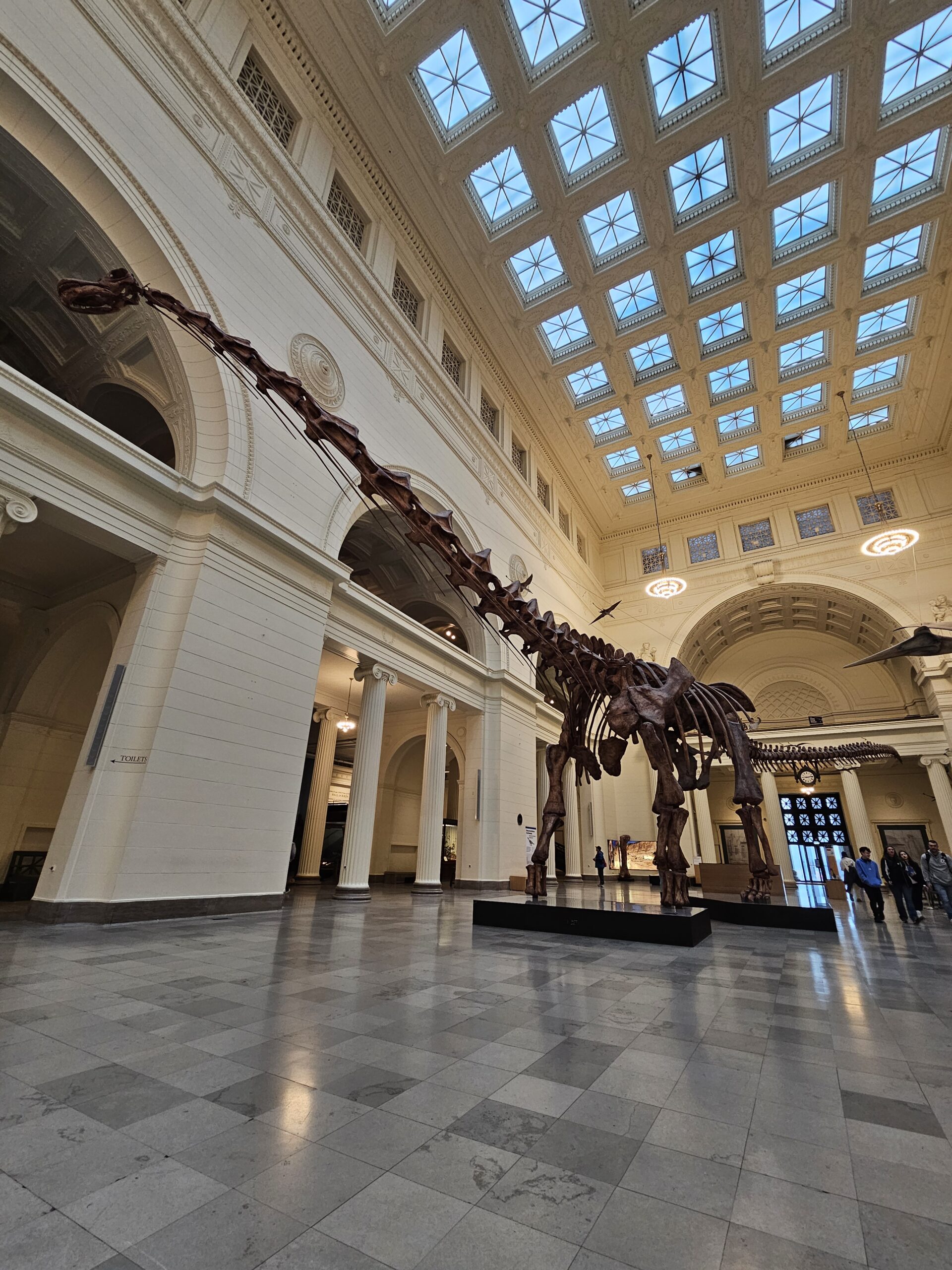
In the foyer, it is impossible to pass by the 37-meter-long Patagotitan mayorum dinosaur skeleton. It seems unbelievable that the first skeleton fragment of this dinosaur was found only in 2010 in Argentina. It is the largest animal to have ever walked the face of the Earth, weighing roughly the same as 10 African elephants—or 70 tons. Going up to the second floor, you can view its skull. It looks like the dinosaur is smiling.
I walk past a glass-walled laboratory with signs on the windows reading “Do not knock, fossil preparators at work,” and start from the very beginning in the Evolving Planet exhibit. As it is the first exhibition of the day, I am ready to absorb as much as possible, and in this hall, I don’t just walk past or linger at the displays—I also read what is written much more thoroughly. Starting with information about eukaryotes, to a visualization of Hallucigenia, which looks like a spiky worm with seven pairs of legs and spines that walked the ocean floor in ancient times, all the way to the massive dinosaurs. The main exhibit of this museum is the most complete Tyrannosaurus rex skeleton ever found, nicknamed SUE in honor of American paleontologist Sue Hendrickson, who discovered it. SUE’s image features on most of the t-shirts and hats in the museum souvenir shop, and it is one of the most important exhibits in the museum.
In one of the displays, I see a counter showing how many species have gone extinct since 8:00 this morning. At that moment, the counter shows 13. That’s 82 species a day. A normal rate would be one species every four years. Further down the exhibition, you can learn about mass extinction events in Earth’s history. It is clear that one is happening right now, and humans are to blame.
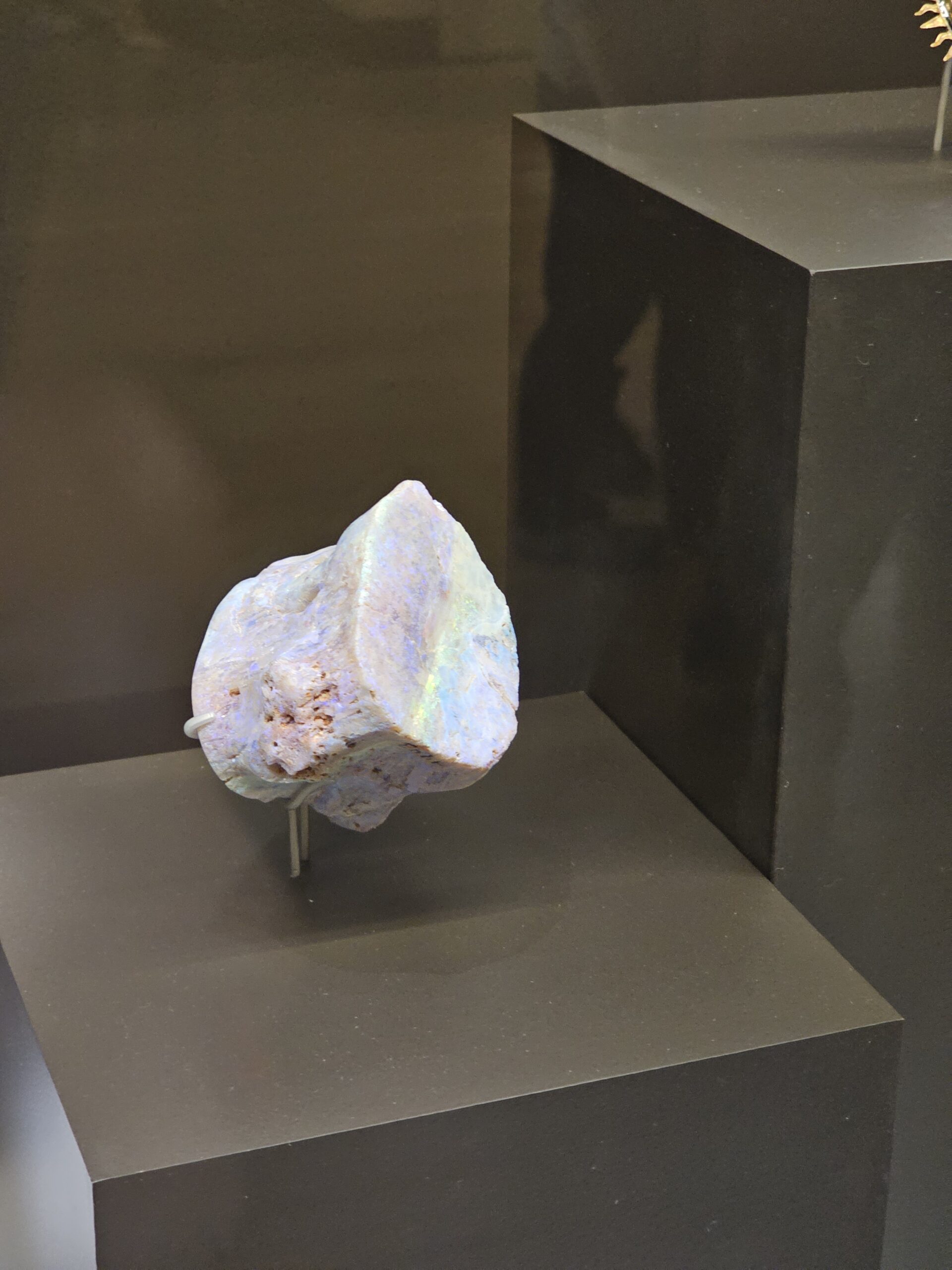
I walk through the Cyrus Tang Hall of China, where I pay attention to tiny silk shoes worn by women who had bound feet, as described in Lisa See’s book Snow Flower and the Secret Fan. Next, I view the massive botanical exhibit featuring highly accurate models of a wide variety of plants showing plant relationships; this part of the exhibition is less interactive, though, and there are no visitors here at all. I walk through the meteorite exhibit and look at Colombian gold jewelry figurines until I reach the hall of gems, semiprecious stones, and minerals. Here, an opalized dinosaur vertebra catches my attention—the spine fossilized and created a cavity that filled with silica-rich gel, which later turned into opal.
In one display case, I notice a mention of Latvia next to amber necklaces, a pendant, and individual pieces of amber, in one of which a 30-million-year-old insect is trapped. The description makes me scratch my head: “In Lithuania, Latvia, and North European coastal towns, Baltic amber is gathered today much as it was centuries ago—people stand on the shore with a long spear in one hand and a net in the other to dislodge and capture pieces of amber.” A tourist reading this might be very surprised not to encounter people with spears on our beaches.
Satiety sets in after a couple of hours in the museum. It is clear why many people purchase an annual membership, because here too, it is impossible to walk through everything in a day or two. It is definitely worth taking one of the guided tours that highlights and explains the most impressive exhibits.
Afternoon Tea at The Langham with a River View
After exploring the museum, I rush to the very heart of the city, The Langham hotel, where I have an afternoon tea reservation. It is considered the best in the city and also costs a pretty penny—along with the mandatory 20% tip and tax, it comes out to nearly $178 per person, which is significantly more than the promised $130 when you press the “book” button. But visiting afternoon tea venues abroad has become a tradition of mine, and Chicago is no exception. I try to squeeze everything possible into the short span of time!
I quickly find the hotel lobby, which is by no means located on the first floor, where I am shown the way to the adjacent Pavilion lounge, where this experience takes place. Decorative elements that move slightly due to air currents are placed throughout the room. Due to the shiny material, they slightly resemble many tiny Cloud Gates. A large bouquet of flowers stands at the entrance—though it seems to be an artificial arrangement—and several small figures are positioned around. One of them shows its backside. The sound of a harp fills the room as a musician in a gorgeous yellow stage outfit plays various popular melodies in the corner of the lounge.
The other tables are mostly occupied by families with young daughters, and for a moment I feel like Penny, Bernadette, and Amy in the TV series The Big Bang Theory when they go to a tea party like this.
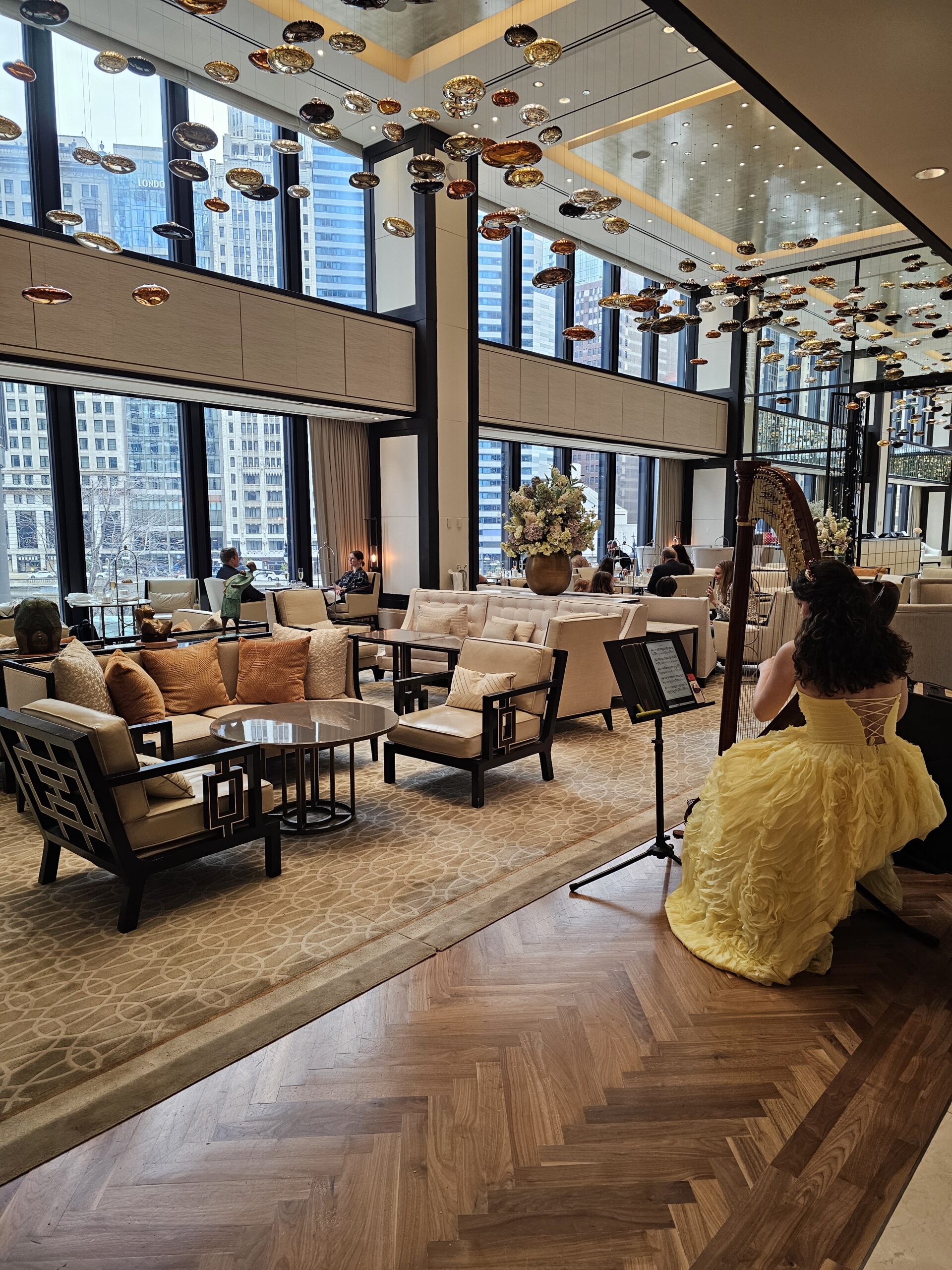
The menu in such places is fixed; you only have to choose the tea (I pick an oolong) and a sparkling beverage (non-alcoholic champagne, at the waitress’s recommendation). It continues to drizzle outside as I am about to start reading A Year in Provence, which I brought along, when my culinary journey begins. A Brie cheese sandwich with zucchini and mustard seeds, pumpernickel with egg and asparagus, the inevitable cucumber sandwich, and a carrot “salmon” sandwich. Then they bring me a candlestick with a single candle—a cake—because the tea offering is inspired by Beauty and the Beast. The cake is lit (and they immediately add that the burner is designed for use in food), then scones appear, which must be eaten with the available Devonshire cream, jam, or honey butter. Devonshire cream is just clotted cream, but honey butter is something new to me. It turns out to be slightly salted butter whipped with honey. After a few bites, I conclude that this sweet-and-salty combination is not to my liking. Later, other cakes are brought out, but I ask to have them boxed up to go because the amount of sweetness makes me feel almost nauseous. No berries or fruits are offered for decoration, which usually help cut through the rich sweetness. The service here is also savory dishes first, then sweet ones, but I usually like to eat sandwiches in a mixed order so it’s not so much sweet stuff all at once. I ask the waitress how she manages to remember the entire menu in such detail? She says that the tea menu changes roughly once a quarter and they are thoroughly trained for it. It sounds like you almost have to pass an exam!
Overall, the impression of the experience remains positive, but the hefty price tag still makes itself known. Comparing it to the offering in Hamburg, where I have enjoyed my favorite tea so far and at a much friendlier price, it felt like there was a tiny bit more there and various details were thought out more carefully. Still, I have added another one to my afternoon tea collection.
Latvians in Chicago
While exploring the museum and having tea, I receive a message from a Latvian woman in Chicago who noticed my social media posts and invites me to meet up. So, soon after the tea experience, I head to the hotel, buying another large suitcase along the way to hold all the purchased goods and items previously ordered online. A couple of hours later, I meet up with Jūlija and Valentīns, whose family has been living in Chicago for almost two years due to work but is preparing to head back home soon. They drove for over an hour to pick me up, only for us to drive for another hour and a half in the opposite direction to reach Starved Rock State Park. I feel bad that such a long distance is traveled on my account, and this time I don’t have any treats from Latvia with me (exceptionally, I didn’t bring a single package of zephyrs or candies, which usually come in handy during trips!). All I have with me is instant oatmeal and a protein bar bought at a supermarket. Despite the lack of gifts, the long drive to the nature trails passes quickly in conversations about life in the US, the main differences, and impressions. We discuss everything from medical care to work culture—the good, the bad, and everything in between.
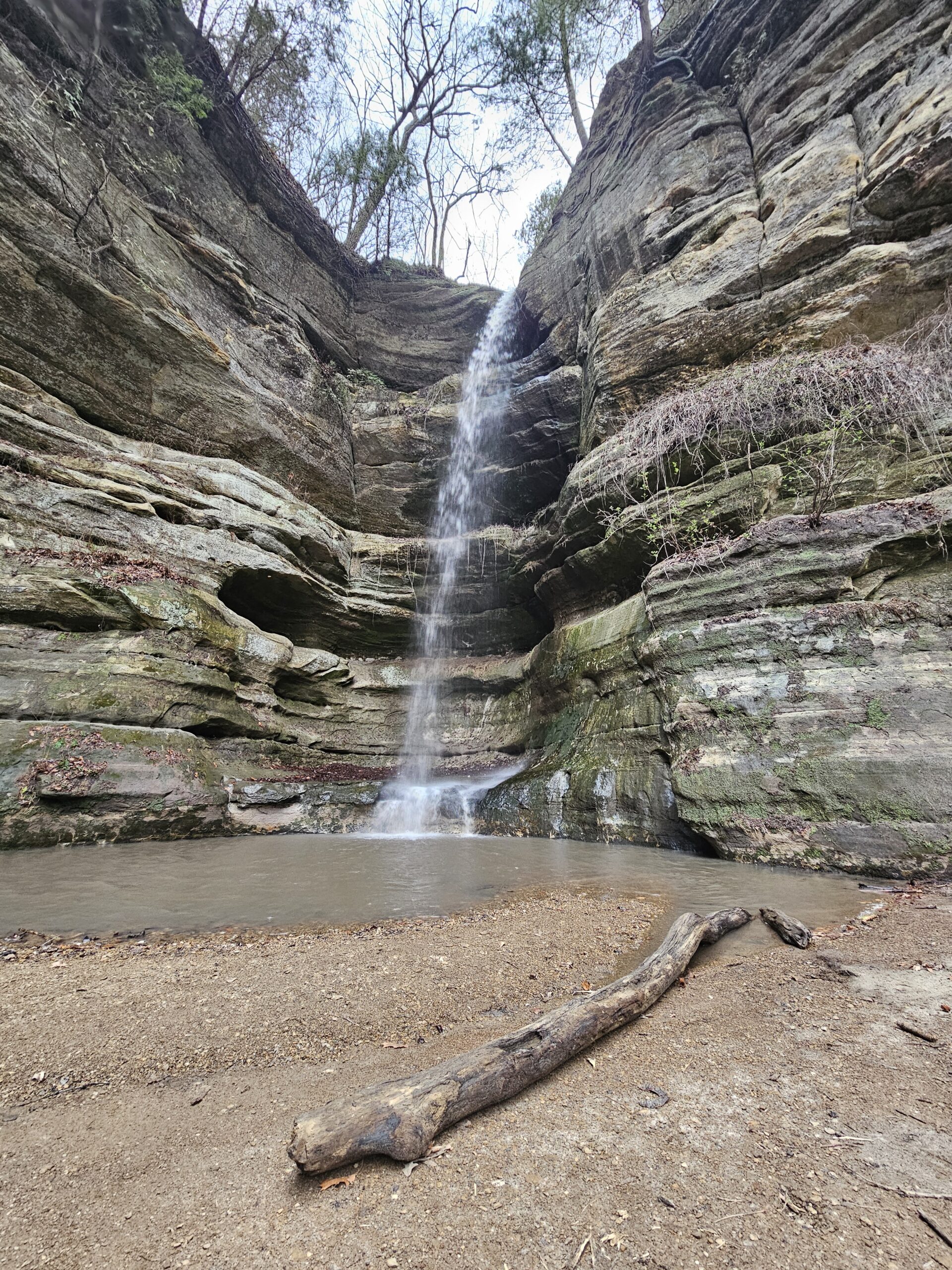
When we arrive at the nature park, it is traditionally overcast, of course. I am dressed in semi-city attire since I didn’t bring anything for hiking—city boots, a raincoat, and two sweaters underneath so as not to freeze. Climbing up the many stairs, however, freezing is out of the question. One of the main trail branches of the park is closed for reconstruction, so we take a longer route to the main sight, the waterfall. There is not a soul there, but we are greeted by two Canada geese. I imagine how beautiful it is here on a sunny day and when the leaves come out! If a place like this were located somewhere in Latvia, there wouldn’t be a moment of rest from visitors!
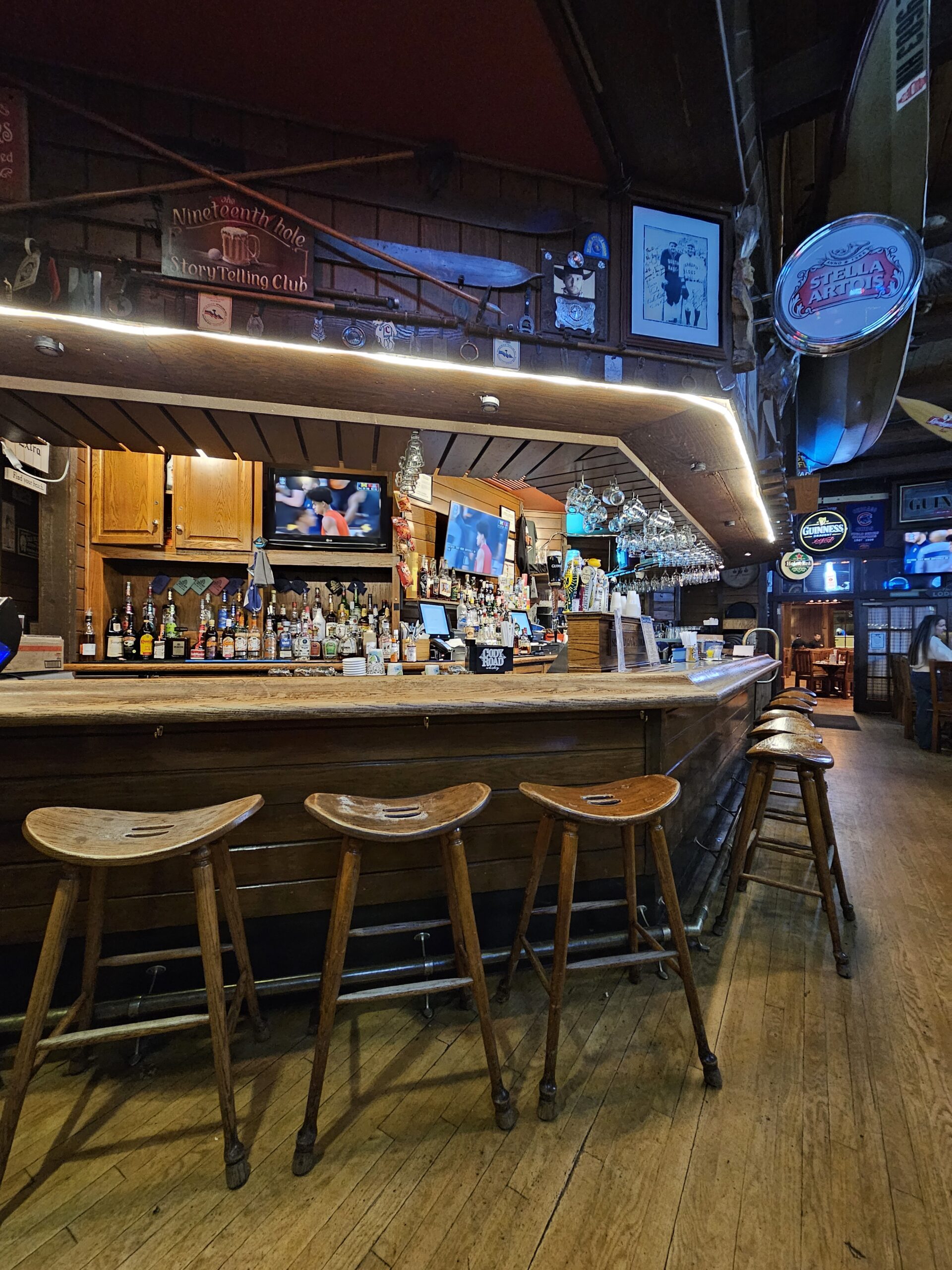
We walk the trails and it gradually starts getting darker. We drop into an eatery right there, which is in a typical American style—there are TV screens on the walls showing a sports broadcast, the bar counter and chairs feature wooden elements, and I notice slow-braised beef on the menu, which is what I associate most with such places. I feel truly spoiled by the attention because I certainly wouldn’t have made it to the nature park on my own since I didn’t rent a car this time. I am pleasantly surprised by how much you can have in common with people you haven’t met before, and overall, very satisfied with how the day turned out!
The View from Above
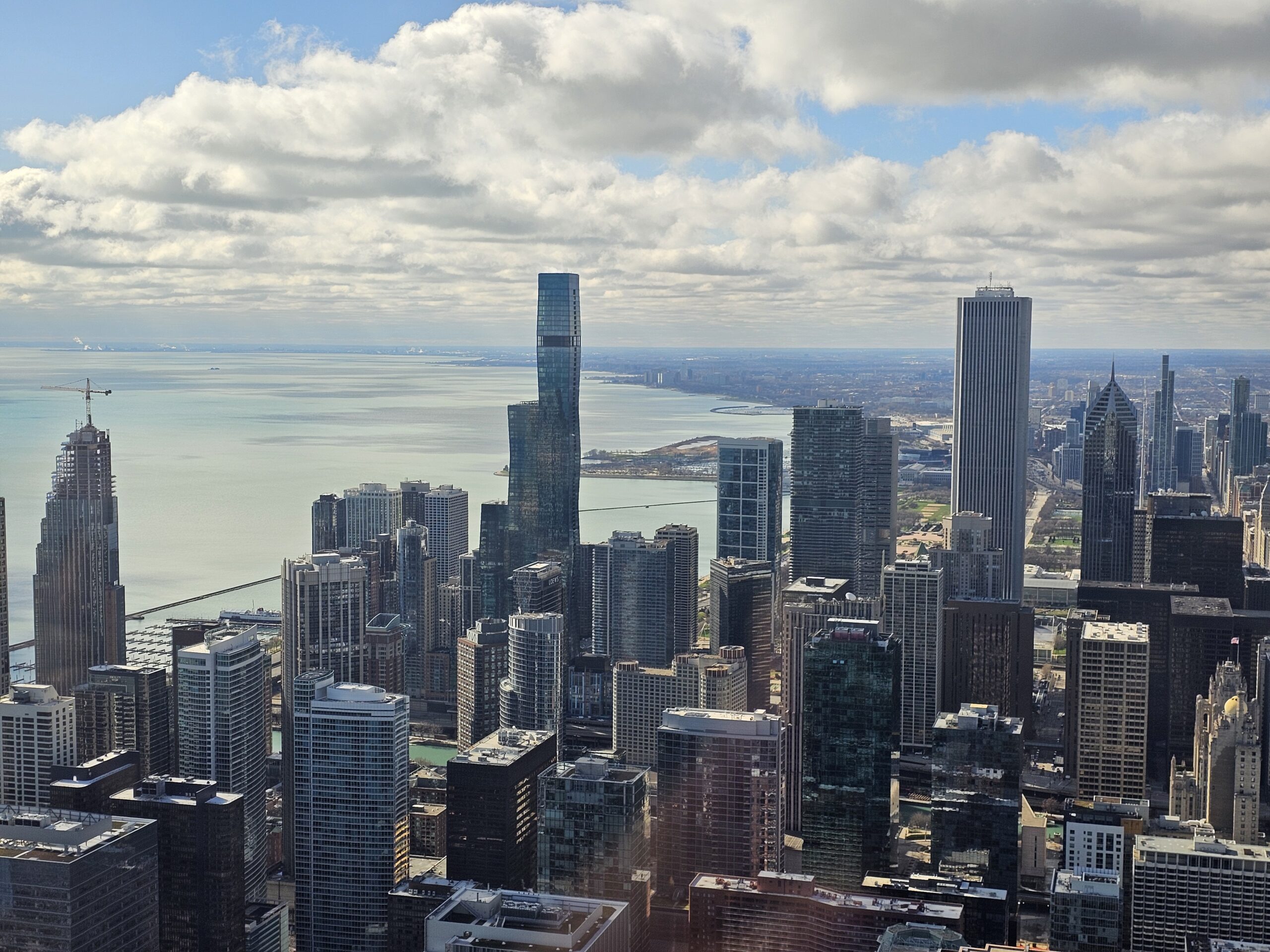
“Build it and they will come,” someone once said, and those are exactly my thoughts on all possible observation towers and decks. I am no exception, and on my last day before heading on to New Jersey, right after breakfast, I head to the neighboring 360 Chicago observation deck, located on the 94th floor of a skyscraper. It is a 314-meter-tall building, and I get very lucky—today the right winds are blowing from the lake again, and even though they are indeed blowing, they have brought sunny weather and the tower offers a magnificent view of the surroundings. Now that the city is at least somewhat familiar and I have a rough map of it in my head and clarity on which direction things are located, it is the perfect time to observe it from above. On this sunny day, the lake water looks incredibly blue, with sandy beaches around it, and skyscrapers right next to it that an uninitiated person might mistake for New York. Of course, the endless comparison to the Big Apple, the city that never sleeps, but this one seems the closest out of others I’ve been to in the US. Perhaps the only comparable one is nearby Detroit (about a four-hour drive away) and its buildings from the city’s period of glory. But in downtown Chicago, there is no trace of Detroit’s emptiness and spookiness.
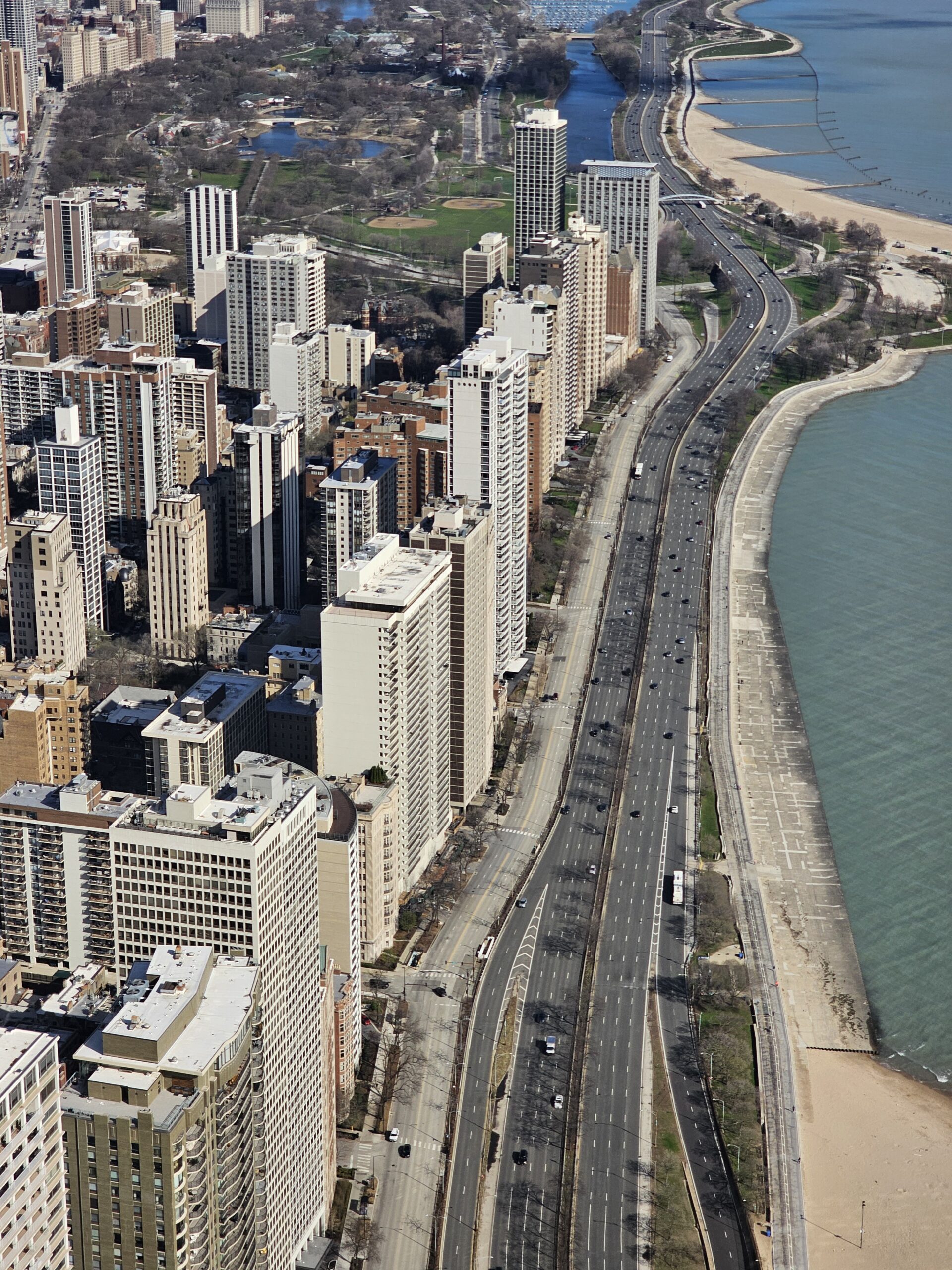
The visit to the tower is short, but I still have to part with $35 for it, and soon I am back on the streets. Should I go put on another layer or head straight to the beach? I decide not to waste time, and at a brisk pace, I am already at the beach a few minutes later, passing by a field of scilla flowers in a small park near buildings that probably have one of the best lake views in the entire city.
Miraculously, the wind doesn’t pick up as much on the beach and promenade as it does on the streets, and it doesn’t feel chilly at all. It is Sunday morning, Easter, and it’s clear that peak season for the beach is still ahead—all the shops are closed and 90% of the other visitors are using the path for sports activities, running, or cycling. I walk almost to the next pier, but then it is time to head back to the hotel to pack my bags. Walking in the opposite direction, the wind indeed blows a bit stronger, but the sun is already warming things up more, and during the short moment until I manage to get to the underground tunnel away from the promenade and into the shelter of a side street, I manage. Here, leaves are already starting to sprout on the trees and the lawn looks freshly green. Not for nothing, there is a sign on it not to use it for dog walking.
Soon enough, the bags are packed, one last warming tea in the hotel room is finished, and I can head to the airport. Still, I feel a bit anxious about potential lines at security control, even though I don’t see any information about lines in the news over the last few days, so I leave early. Despite the navigation system’s optimistic forecast, it doesn’t quite work out that way, and I dread to think what happens here during real rush hours—but I still make it to the airport with a large time reserve. Everything is quiet. No lines, no unnecessary questions. On the domestic flight to my next destination, New Jersey—where it has already been a bit warmer and the trees are in full bloom—as if to spite me, the cold and windy weather travels with me, and I shiver a bit here too over the following days.
I am glad that this time I sacrificed the free time I could have dedicated to New York to explore Chicago. A huge number of new impressions, a busy mind and legs, another US metropolis to compare other cities in this country and others to in the future. If only I had been here a week later in full bloom, or a month later so the wind wouldn’t cut through all my clothes! This city truly has a lot to offer a traveler, and I can imagine how wide the range of sights is if you rent a car and explore the surrounding area as well!
Excursions worth considering:
- A 1.5-hour Chicago River cruise focusing on the city’s architecture
- 360 Chicago observation deck
- If you plan to visit many museums, consider purchasing the Chicago Pass!